The luxury China tour cost is, for most high-net-worth travelers approaching this question for the first time, genuinely difficult to benchmark — not because the numbers are hidden, but because the travel industry has made a sport of obscuring what those numbers actually buy. A search for “luxury China tour 2026” returns prices ranging from $1,500 per person to $80,000, and the gap between them is almost never explained. The result is that discerning travelers — people who have stayed at the Aman Tokyo, chartered yachts in the Aegean, and taken the Venice Simplon-Orient-Express — approach a China itinerary with an uncertainty they would never accept in any other context. This article exists to end that uncertainty. What follows is a line-by-line, category-by-category breakdown of every cost component in a genuinely luxury private China tour in 2026, written with the transparency that the industry rarely offers and that intelligent travelers have every right to demand.
✨ At a Glance
- The Core Reality in 2026: A genuine luxury China tour — defined by 100% private guiding, five-star heritage or Aman-tier accommodation, first-class rail or business-class domestic flights, and no commission-based shopping stops — costs between $600 and $1,500 per person per day, with ultra-luxury private-jet itineraries reaching $2,000 or beyond.
- Crucial Advice: The single largest driver of hidden cost variance is the guide model: commission-based guides generate invisible revenue from shopping detours that inflate the tour’s apparent affordability while consuming hours of your irreplaceable time; salaried, expert-led private tours command a higher headline price that is, in practice, the more economical choice.
- The Xiora Solution: Xiora Travel’s 100% private, zero-shopping bespoke China itineraries are quoted with full line-item transparency — accommodation, salaried bilingual guides, private premium transport, exclusive access, and all logistics — so the number you see is the number you pay.
Why Luxury China Tour Costs Vary So Dramatically
Before examining the numbers, it is worth understanding the structural reasons why two 10-day “luxury China tours” can be priced $15,000 apart per person. There are four principal cost variables, and most agencies discuss none of them with adequate precision.
The guide model is the most consequential and least disclosed variable. In China’s mainstream tourism economy, many guides operating under “luxury” branding are still remunerated partly or entirely through retail commissions. Their income depends on the purchases their group makes at jade factories, cloisonné workshops, and silk emporiums. An agency that employs commission-based guides can quote a dramatically lower day rate — but only because the true cost is subsidized by your time and your wallet at mandatory shopping stops. A salaried expert guide, by contrast, is a genuine line-item cost, and it is reflected in the price. At Xiora Travel, every guide is a full-time, university-educated, salaried employee. That commitment is non-negotiable, and it is one of the clearest reasons our quoted cost is what it appears to be.
Accommodation tier is the second major variable. The distance in experience — and in price — between a five-star business hotel and a property like the Aman Summer Palace in Beijing, where your courtyard suite shares a wall with a Qing Dynasty imperial garden, is not simply a matter of thread count. It is a matter of what kind of China you wake up inside. The Rosewood Beijing, the Temple House Chengdu by SWIRE, the Amanfayun among the tea plantations outside Hangzhou — these properties define a category of accommodation that most group-tour operators, even those calling themselves “luxury,” do not access.
Access and exclusivity constitute the third variable. Pre-dawn entry to the Forbidden City’s Hall of Clocks before general admission, a private conservation session inside the Dunhuang Mogao Caves restricted zones, a dinner reservation at a restaurant with no English signage and a six-month waiting list for local diners — these experiences require relationships, planning lead times, and local institutional knowledge that cannot be purchased at the last minute. They are a real cost of genuine luxury.
Group size and true privacy is the fourth. A “private” tour that mixes two couples on a shared coach with strangers is not a private tour. A 100% private tour means that your vehicle, your guide, and your itinerary are yours alone, calibrated entirely to your preferences, adjustable on the ground at any moment. The cost difference between the two models is significant and entirely justified.
Luxury China Tour Cost: The Three Tiers Explained for 2026
For the purposes of this breakdown, we define “luxury” as any private China tour operating above the 4-star accommodation and standard private-guide baseline. Within that definition, there are three meaningful tiers in 2026, each with a distinct profile of what the money buys.
Tier 1 — Premium Private
$500 – $750 per person, per dayBest for: First-time visitors to China who want genuine quality without ultra-luxury pricing. Ideal for couples or small families on a 10–14 day itinerary.
- Accommodation at top-rated 5-star chain properties: Ritz-Carlton Beijing, St. Regis Shanghai, Four Seasons Chengdu. Average room rate: $280–$450 per night.
- Dedicated salaried bilingual guide (one guide per group), private licensed vehicle with professional driver — never a shared coach.
- Domestic transport via CR400AF Fuxing high-speed rail first class or domestic business-class flights where faster. All tickets pre-purchased and pre-registered.
- Pre-purchased timed entry to all major sites; priority access to key attractions during lower-crowd windows.
- Full WeChat Pay and Alipay setup for the traveler; SIM card pre-arranged and activated on airport arrival.
- Zero shopping stops. Zero commission detours. Contractually guaranteed.
- Estimated 10-day total (2 travelers): $10,000 – $15,000 per person, excluding international flights.
Tier 2 — Bespoke Heritage Luxury
$750 – $1,200 per person, per dayBest for: Experienced travelers who have done China before and want depth, exclusivity, and stays at iconic heritage properties. The Xiora Travel signature tier.
- Accommodation at Aman properties (Aman Summer Palace Beijing, Amanfayun Hangzhou), Rosewood Beijing, Temple House Chengdu, or equivalent-tier boutique heritage hotels. Average room rate: $550–$1,100 per night.
- Senior specialist guide — a category above standard bilingual guides — with deep academic or professional expertise in the itinerary’s specific cultural and historical context (e.g., a former Peking University art history lecturer for a Beijing palace circuit).
- Private premium vehicle fleet; domestic travel by first-class high-speed rail or chartered private propeller aircraft for remote destinations such as Zhangjiajie or Dunhuang.
- Exclusive access experiences: pre-dawn entry to heritage sites, private studio visits with working artists, reservation-only meals at zero-English-signage family restaurants.
- Bespoke dining programme: every meal pre-researched and pre-reserved, with dietary preferences and spice calibration communicated in Mandarin to each kitchen.
- A dedicated journey designer available via WhatsApp throughout the trip for real-time itinerary adjustments.
- Estimated 10-day total (2 travelers): $15,000 – $24,000 per person, excluding international flights.
Tier 3 — Ultra-Luxury & Private Jet
$1,500 – $3,000+ per person, per dayBest for: Multi-generational families, anniversary journeys, or travelers who wish to compress a 3-week itinerary into 10 days without logistical friction. Also appropriate for senior executives with hard schedule constraints.
- All of Tier 2 included, plus: private jet charter between cities (Cessna Citation CJ3 or equivalent for 4–6 passengers; larger aircraft available). Eliminates all domestic airport transit time entirely.
- Accommodation at the apex of what China offers in 2026: Aman Summer Palace Hutong Suite (approx. $2,200/night), Rosewood Beijing Manor Suite, or the Amanfayun villa compound in Hangzhou.
- Dedicated in-country logistics coordinator — a separate team member from the guide — whose sole function is to manage vehicle positioning, restaurant confirmations, access permits, and real-time contingency planning.
- Private cultural programming: a calligraphy master who travels with the group for a morning, a private ink-wash painting session at the Suzhou Museum with a senior curator, a dawn tai chi session in the Temple of Heaven enclosure before public entry.
- All meals included and bespoke-designed: from a private hotpot in a rented hutong courtyard in Beijing to a longjing tea farm luncheon above Meijiawu village.
- Estimated 10-day total (2 travelers): $30,000 – $60,000+ per person, depending on aircraft type, accommodation selections, and bespoke programming.

“A commission-based tour guide is not a cheaper option — they are an invisible business arrangement in which your time is the currency being spent without your knowledge or consent.”
Luxury China Tour Cost: Every Line Item, Demystified
The following is the actual cost architecture of a Tier 2 Xiora Travel 10-day private itinerary for two travelers, covering Beijing, Xi’an, and Shanghai, built around Aman or equivalent-tier accommodation. International flights are excluded.
Accommodation: The Largest Single Variable
At the Tier 2 level, accommodation typically represents 40–50% of the total on-the-ground cost. The Aman Summer Palace Beijing runs approximately $950–$1,200 per night for a courtyard suite in peak season (late September through November; March through May). The Rosewood Beijing Manor Wing starts at around $750 per night. The Amanfayun in Hangzhou — a village of restored Qing Dynasty farmhouses within a UNESCO tea-planting heritage zone — ranges from $700 to $900 per night for a villa. For a 10-day itinerary at this tier, accommodation alone commonly runs $8,000–$12,000 per couple, or $4,000–$6,000 per person.
Salaried Expert Guiding: The Most Undervalued Cost
A senior specialist bilingual guide on a Xiora Travel itinerary commands a daily rate of $350–$600 depending on expertise tier, language combination, and destination. This rate reflects full employment — salary, benefits, and the training investment of a professional who has typically spent five to fifteen years developing deep institutional knowledge of their region. By comparison, a commission-based guide may cost an agency $50–$80 per day in direct fees, with the balance extracted from your shopping time. The math is straightforward: the “expensive” guide is, when measured against total experience quality, the dramatically better value. For a 10-day itinerary, expert guiding costs $3,500–$6,000 total.
Private Premium Transport
A private licensed vehicle with a professional driver costs $150–$250 per day in China’s major cities, depending on vehicle class (Mercedes V-Class, Toyota Alphard, or BMW 7 Series are standard at the luxury tier). Domestic transport between cities at the Tier 2 level is handled by Fuxing CR400AF high-speed rail first class (Beijing–Shanghai: approximately $155 per person first class; Beijing–Xi’an: $145 per person) or domestic business-class flights where rail is impractical. For a 10-day itinerary with three city transitions, transport costs typically total $3,000–$5,000 for two travelers.
Exclusive Access and Curated Experiences
This is the category most opaque in standard agency quotations, and it is where the genuine differentiation of a bespoke tour is created. Pre-dawn access to the Forbidden City’s Treasure Gallery is arranged through institutional relationships and typically carries a facilitation cost of $200–$500 per session. A private session with a master guqin musician in a Suzhou garden teahouse costs approximately $300–$600. A pre-dawn private panda viewing at the Chengdu Research Base of Giant Panda Breeding — before the gates open to the public — requires advance coordination and specific permits. Across a 10-day itinerary with three to four bespoke access experiences, this category adds $1,500–$3,500 to the total.
Dining: The One Category That China Makes Extraordinarily Affordable
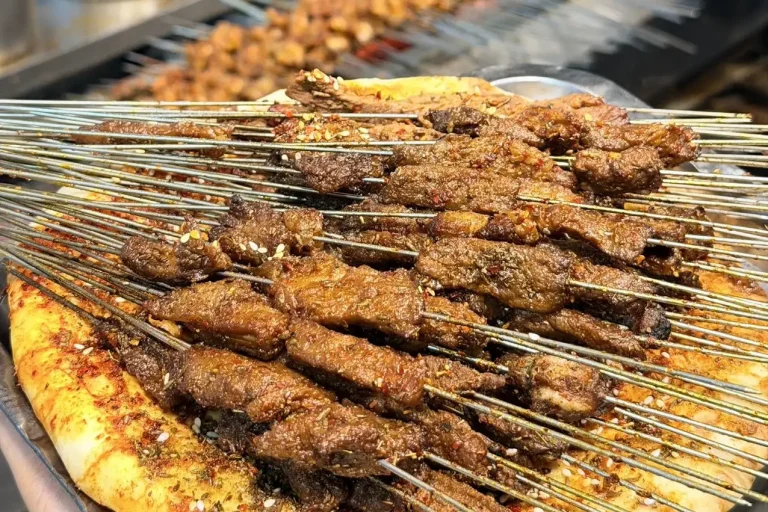
This is where China’s cost structure dramatically inverts Western luxury travel assumptions. At a high-end restaurant in Beijing’s Sanlitun district or a celebrated cāngying guǎnzi “fly restaurant” in Chengdu, an outstanding multi-dish dinner for two rarely exceeds $80–$150, including premium baijiu or fine Chinese tea. Even at the Ultraviolet by Paul Pairet in Shanghai — China’s most celebrated tasting-menu restaurant, a 10-seat per-night experience with a world-class wine list — dinner runs approximately $570 per person. Fine dining in China is, by the standards of comparable experiences in London, New York, or Tokyo, a revelation of value. Budget $100–$200 per day for two for a mixed programme of elite local restaurants and one or two premium dining experiences.
Luxury China Tour Cost: What Your Money Actually Buys
| Cost Component | Standard Option | Xiora Luxury Standard |
|---|---|---|
| Accommodation (per night) | $150–$250 · 4-star business hotel (Hilton, Marriott) | $550–$1,200 · Aman Summer Palace, Rosewood, Temple House, Amanfayun |
| Guide Fee (per day) | $50–$100 · Commission-dependent freelancer; income from shopping stops | $350–$600 · Full-time salaried specialist; zero commission model |
| Domestic Transport | Shared coach or economy class; self-managed ticketing | Private Mercedes V-Class or Alphard daily; Fuxing HSR first class or domestic business-class flights; all pre-booked |
| Shopping Stops | 2–4 compulsory per day; 2–4 hours of itinerary consumed daily | Zero. Written guarantee. No exceptions. |
| Site Access | Standard public entry; queuing with general admission crowds | Pre-dawn and off-hours access; timed-entry pre-secured; restricted zone access where available |
| Digital Logistics | Self-managed; WeChat Pay and Alipay registration left to traveler | SIM pre-activated; WeChat Pay and Alipay set up before first meal; VPN guidance provided |
| Itinerary Flexibility | Fixed at booking; no day-of adjustments | Fully fluid; WhatsApp-connected journey designer; real-time rerouting at any moment |
| Total (10 days, 2 travelers) | $3,000–$5,000 per person · (excl. int’l flights) | $15,000–$24,000 per person · (excl. int’l flights) — full-spectrum luxury, zero hidden costs |
International Flights: The Cost Component Outside Any Agency’s Control
International airfare to China in 2026 is a market undergoing significant evolution. The resumption of full capacity on Beijing Capital International Airport (PEK), Shanghai Pudong (PVG), and the newer Beijing Daxing International (PKX) routes from North America and Europe has restored competitive pricing across most origin markets. Business-class round-trip fares from London Heathrow to Shanghai Pudong on Cathay Pacific or British Airways typically range from £3,800 to £6,500 depending on season and booking lead time. From New York JFK to Beijing Capital, Air China and United business-class round trips range from $4,500 to $8,000. From Sydney to Shanghai on Qantas or China Eastern, business class runs AUD $6,000–$10,000 round trip.
First-class fares on routes where available — notably Lufthansa Frankfurt–Shanghai and Singapore Airlines Singapore–Beijing — add another 40–80% over business. For travelers whose total budget is calibrated at the Tier 3 ultra-luxury level, positioning international flights as a comparable line-item to domestic charter costs is the appropriate frame.
Xiora Travel’s pre-departure consultations include airline and cabin-class recommendations specific to each traveler’s origin city, preferred loyalty programme, and arrival logistics. We do not book international flights on behalf of clients — but we brief every detail of the transfer from arrival gate to hotel check-in, including the specific immigration queue, customs declaration procedure, and ground transport arrangement that eliminates the airport disorientation that affects even experienced China travelers on a first visit.

The Hidden Costs of Choosing the Wrong Tour Operator
The luxury China tour cost conversation is incomplete without accounting for the costs that never appear on a competitor’s invoice. They are real costs — paid in time, experience, and sometimes money — and they are the direct consequence of choosing an operator whose economics are built on a commission model rather than a service model.
A tour that includes four compulsory shopping stops across a ten-day itinerary, each consuming ninety minutes, has consumed an entire day of your China experience — a day you paid for and did not receive. At the rate of $800 per person per day for a standard private tour, that is $800 of experience subtracted from what you were sold. The jade you did not want to buy was free. The afternoon at the Longmen Grottoes of Luoyang, standing in the golden hour light while ten thousand Tang Dynasty Buddha faces watched the river below, was not.
Beyond time, the commission model creates a subtle but corrosive distortion of the entire travel relationship. When your guide’s income depends on your purchasing behavior, the relationship is no longer one of expert and client — it is one of salesperson and target. The best anecdote a guide tells you, the most evocative description of a site, the most thoughtful answer to your question about Chinese history: all of these are means to an end that has nothing to do with your experience of China. This is not a moral argument. It is an architectural one. The best guides we have ever worked with — people with decades of deep knowledge and genuine passion for showing their country to thoughtful travelers — refuse the commission model entirely. Hiring them costs more. The difference in your experience of China is not measurable in percentages.
To begin planning your itinerary with full cost transparency, explore Xiora Travel’s complete portfolio of private bespoke China journeys — each one priced with every line item disclosed before you commit to a single dollar.
Travel Without the Friction
At Xiora Travel, our expert bilingual guides handle every logistical detail, ensuring a seamless, 100% no-shopping luxury experience. Your time belongs to the journey.
Explore Private Journeys ↗What Is Not Included — and What That Means for Your Budget
For most Xiora Travel clients in 2026, the visa question has a welcome answer. China’s expanded visa-free policy now covers travelers from the United Kingdom, France, Germany, Italy, Spain, the Netherlands, Switzerland, Australia, New Zealand, and dozens of other nations for stays of up to 30 days — the most generous access arrangement China has offered to Western travelers in the modern era, and a direct signal of the country’s intent to welcome high-value inbound tourism. American citizens currently require a standard tourist visa ($140), arranged well in advance through the Chinese consulate or a licensed visa service.
Standard Xiora Travel itineraries at the Tier 1 and Tier 2 level do not include international flights, travel insurance, or personal spending. Travel insurance for a two-week China trip at the luxury tier — including medical evacuation coverage, which is essential given the geographic scope of some itineraries — runs $200–$600 per person through providers such as Battleface or AIG Travel Guard. This is non-negotiable in our pre-departure briefing. A medical evacuation from Jiuzhaigou or Zhangjiajie without adequate coverage can cost $80,000 or more. A $400 insurance premium is not an optional upgrade — it is the minimum responsible travel practice for any itinerary that extends beyond China’s major cities.
Frequently Asked Questions
How much does a luxury private China tour cost per person in 2026?
A genuinely luxury private China tour — defined by 100% private guiding with a salaried specialist guide, five-star or Aman-tier accommodation, first-class domestic transport, and zero shopping stops — costs between $600 and $1,500 per person per day on the ground in China, excluding international flights. For a 10-day itinerary at the Tier 2 bespoke level, most Xiora Travel clients budget $15,000–$24,000 per person for all in-country costs. Ultra-luxury itineraries incorporating private jet transport and Aman properties throughout can reach $30,000–$60,000 or more per person for 10 days. The most important thing to understand is that “luxury” pricing spans an enormous range in the China tour market — the defining question is not the headline number, but what that number includes and, more importantly, what it excludes.
What is the most expensive part of a luxury China tour?
Accommodation is consistently the largest single cost component, typically representing 40–50% of total on-the-ground spend at the luxury tier. A suite at the Aman Summer Palace in Beijing runs $950–$1,200 per night in high season; a villa at the Amanfayun in Hangzhou starts at $700. For a 10-night itinerary split between three cities, accommodation alone for two travelers commonly totals $18,000–$22,000. Expert salaried guiding is the second-largest component and the most philosophically significant — it is the cost that separates a genuine luxury experience from an expensive version of the same product that volume agencies offer. Transport, exclusive access, and dining follow in descending order of cost — though dining in China, even at the finest level, is dramatically more affordable than comparable meals in Europe or Japan.
Is a luxury China tour worth the cost compared to traveling independently or on a group tour?
For the type of traveler Xiora Travel serves — high-net-worth, time-constrained, intellectually curious, and accustomed to excellence in every other context of their life — the question is more precisely framed as: what is my time worth, and what level of access am I actually buying? A self-planned China itinerary of equivalent quality is not possible without months of preparation, Mandarin language skills, deep local institutional relationships, and the willingness to absorb inevitable logistical failures in a country where the entire digital infrastructure runs on platforms designed for Chinese citizens. A group tour at even a premium price point introduces strangers, fixed schedules, and the commission-retail model into every day. A bespoke private tour with Xiora Travel eliminates all of those variables. The cost premium over a group tour is real. So is the difference in what you bring home: not photographs of the same sights, but an understanding of a civilization that most visitors, spending twice as many days on cheaper tours, never come close to reaching.