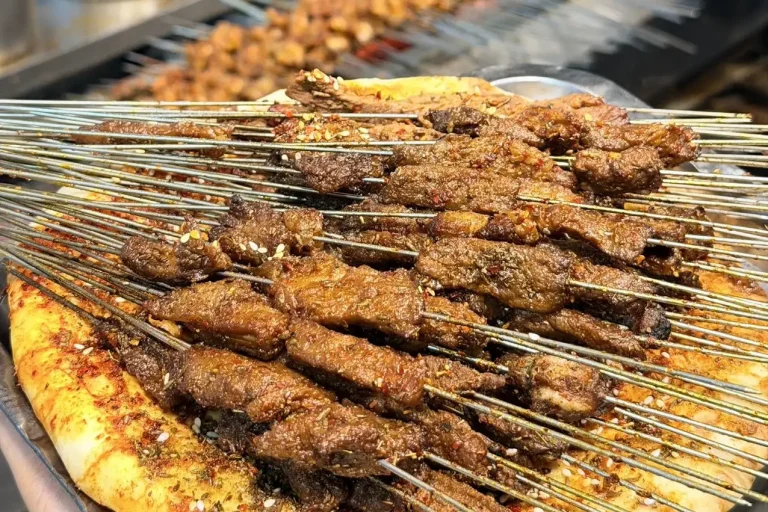
Authentic Sichuan food is, in the estimation of most first-time foreign visitors, simultaneously the most exhilarating and the most misunderstood cuisine on earth. Before a single chopstick touches a bowl of mapo tofu in Chengdu, the traveler has already been warned — by well-meaning friends, by Reddit threads, by the tingling anxiety of scanning a menu printed entirely in Chinese characters — that this food will punish them. That the chilies will be merciless. That they will sit at the table sweating and silent, a tourist casualty of a cuisine designed for people whose palates were forged in Sichuan basin humidity from infancy. This guide exists to replace that anxiety with something far more useful: knowledge. Because the truth about Sichuan cuisine in 2026 is not that it is too spicy for foreigners — it is that most foreigners have never been shown the full picture.
✨ At a Glance
- The Core Reality in 2026: Authentic Sichuan food encompasses 24 officially recognized flavour profiles — only a subset of which are built on pure heat; the cuisine’s signature sensation is má là (numbing-spicy), produced by Zanthoxylum simulans Sichuan peppercorns, a neurological experience entirely distinct from chili burn.
- Crucial Advice: Chengdu has held UNESCO Creative City of Gastronomy status since 2010, and the city’s most celebrated dishes — zhong shui jiao dumplings, fuqi feipian cold slices, longchaoshou wontons — range from mild to medium; a spice-averse traveler can eat supremely well here with the right guide.
- The Xiora Solution: Xiora Travel’s fully private, no-shopping Chengdu culinary itineraries are designed around your exact heat tolerance — your bilingual guide pre-arranges every restaurant reservation, communicates your preferences in Mandarin, and ensures that every meal is an education, not an ordeal.
The Science of Authentic Sichuan Food: Why “Spicy” Is the Wrong Word
Western culinary vocabulary is poorly equipped to describe what authentic Sichuan food actually does to the body. “Spicy” implies a single, linear sensation — the capsaicin burn of a jalapeño, the white-hot assault of a Scotch bonnet — and so first-time visitors to Chengdu expect more of the same, only amplified. What they receive instead is something genuinely neurologically novel.
The Sichuan peppercorn — huājiāo (花椒), botanically Zanthoxylum simulans — contains a compound called hydroxy-alpha-sanshool that directly triggers the same nerve receptors responsible for detecting touch and low-frequency vibration. The result is má (麻): a tingling, buzzing, electrically alive sensation on the tongue and lips that is not pain. It is closer to the feeling of pressing your tongue to a nine-volt battery — disorienting, surprisingly pleasant, and deeply addictive once you understand it. The red chilies — là (辣) — arrive second, riding a palate that the peppercorn has already softened and opened. Together, they constitute má là, the foundational chord of Sichuan cuisine, and it bears no resemblance to anything the visitor has eaten before.
This is not merely culinary trivia. It is the single most important piece of information a foreign traveler can hold as they sit down for their first bowl of Chengdu hot pot at a place like Haidilao on Chunxi Road or, better, a family-run neighbourhood pot house in Shahepu district at midnight. The fear of Sichuan spice is almost entirely a fear of the unknown. Once you know what the sensation is, and once a knowledgeable guide has calibrated the experience to your threshold, authentic Sichuan food becomes one of the most pleasurable eating experiences on the planet.

“The fear of Sichuan spice is almost entirely a fear of the unknown — once a knowledgeable guide calibrates the experience to your threshold, authentic Sichuan food becomes one of the most pleasurable eating experiences on the planet.”
The 24 Flavours of Authentic Sichuan Food: A Traveler’s Orientation
The Sichuan culinary tradition formally recognizes 24 distinct compound flavour profiles — a taxonomy developed by the Sichuan Cuisine Museum in Chongzhou, the only museum in the world dedicated entirely to a regional cuisine. Of these 24, fewer than eight are defined by significant heat. The majority are built on vinegar, sesame, fermented bean paste (Pixian dòubànjiàng), aged black vinegar from Baoning, sweet wheat paste, and the deep, funky salinity of preserved mustard greens.
Understanding this landscape transforms the visitor from passive sufferer into active participant. Consider the following essential dishes and their actual heat profiles:
- Mapo Tofu (麻婆豆腐): Silken tofu in a fermented bean and chili oil broth. Heat level: medium to high, depending on the cook. The má of the peppercorn dominates. Non-negotiable as a first experience.
- Dan Dan Noodles (担担面): Wheat noodles in a sesame-chili dressing with ya cài preserved vegetable and minced pork. Heat level: mild to medium. The sesame rounds every sharp edge. Universally beloved by first-timers.
- Fuqi Feipian (夫妻肺片): Thinly sliced beef and offal in a chili-sesame dressing served cold. Heat level: medium. The English translation — “husband and wife lung slices” — frightens more visitors than the chili does.
- Zhong Shui Jiao (钟水饺): Pork dumplings in a sweet soy and chili oil dressing. Heat level: mild. These are the gateway dish for the spice-cautious traveler.
- Kungpao Chicken (宫保鸡丁): Diced chicken, dried chilies, Sichuan peppercorns, peanuts, and Shaoxing wine. Heat level: medium. One of the most balanced dishes in the entire repertoire.
- Bobo Chicken (钵钵鸡): Cold skewers of meat, offal, and vegetables bathed in a chili-sesame broth. Heat level: adjustable by selection. An ideal introduction format — you choose each skewer individually.
- Twice-Cooked Pork (回锅肉): Pork belly blanched, sliced, then stir-fried with leeks and Pixian bean paste. Heat level: mild to medium. The defining dish of Sichuan home cooking.
- Sichuan Hot Pot (四川火锅): A communal pot of boiling broth — available in pure spicy, mild white broth, or the iconic yuānyāng divided pot — into which raw ingredients are dipped. Heat level: entirely in your control.
The key insight is that Sichuan hot pot — the dish most foreigners fear most — is in fact the meal that most easily accommodates any heat preference, because the yuānyāng split-pot format places a mild, clean broth on one side of the divider and the nuclear crimson oil on the other. A skilled guide navigates this for you; a group tour simply drops you at the table and hopes for the best.
Authentic Sichuan Food Experience: Private Guided Dining vs. Navigating Alone
| Feature | Standard Option | Xiora Luxury Standard |
|---|---|---|
| Menu Navigation | Picture menus or Google Translate errors; no heat context | Bilingual guide pre-briefs each dish; heat level confirmed with kitchen in Mandarin before ordering |
| Restaurant Selection | TripAdvisor tourist-facing restaurants; inflated prices, adjusted spice | Family-run 苍蝇馆子 “fly restaurants” and multi-generational noodle houses with no English signage |
| Spice Calibration | Fixed menu; no customization possible without language | Full customization: bù là (no spice), wēi là (subtle), zhōng là (medium), tè là (maximum) — communicated precisely |
| Dish Sequencing | Random ordering; palate overwhelmed early | Curated progression: mild → complex → spicy, building heat tolerance and flavour understanding across the meal |
| Cultural Context | Dish names only; no flavour history or ingredient provenance | Narrative for each dish: origin, the Pixian doubanjiang fermentation process, the Qing Dynasty court lineage of kungpao |
| Market Access | Tourist streets only (Jinli, Kuanzhai Alley) | Pre-dawn visits to Qingshiqiao Flower & Food Market and wholesale spice halls in Wuhou District |
| Dietary Restrictions | Difficult to communicate; risk of hidden ingredients | Allergy and dietary cards prepared in simplified Chinese; kitchen verification before every course |
| Payment | Cash dependency; many local spots refuse foreign cards | All payments pre-handled by guide via WeChat Pay; zero friction for the traveler |
Where Authentic Sichuan Food Actually Lives: Beyond the Tourist Trail
Chengdu is a UNESCO Creative City of Gastronomy — a designation it has held since 2010 and defends with quiet, devastating confidence. But the version of Chengdu food that most group-tour travelers encounter is a carefully buffered, internationally legible approximation of the real thing. The tourist hot pot restaurants on Jinli Pedestrian Street are clean and photographable. They are also calibrated for foreigners, which means the broth is milder, the portions are standardized, and the experience, while enjoyable, tells you about as much about authentic Sichuan food as a Chinatown dim sum buffet tells you about Hong Kong.
The real picture lives elsewhere. It lives at Chuancaijin Dan Dan Noodles in the Shahepu neighbourhood, where the owner has been perfecting the same recipe since 1986 and the menu is a laminated card with four items written in marker pen. It lives at a cāngying guǎnzi — a “fly restaurant,” so named because the food is so good it attracts flies — tucked into a residential lane in Wuhou District, where forty stools fill by 11:30 a.m. and the kitchen runs out of fuqi feipian by noon. It lives at the Pixian Doubanjiang Factory in Pixian county, forty kilometres northwest of Chengdu’s city centre, where eight-thousand earthenware urns of fermented broad bean and chili paste age under bamboo lids in an open courtyard, their contents turned twice daily by hand, a process unchanged since the Qing Dynasty.
This paste — Pixian dòubànjiàng, the “soul of Sichuan cuisine” — is the single most important ingredient in the entire tradition. It is not spicy in the way a raw chili is spicy. It is deep, fermented, slightly sweet, intensely savoury, and irreducibly complex. Once you understand this ingredient, you understand why authentic Sichuan food is less about pain and more about the patient accumulation of flavour.

A Day in Chengdu Eating Authentic Sichuan Food: The Xiora Culinary Itinerary
What does a privately guided culinary day in Chengdu actually look like when the itinerary is designed by people who live here? It begins before 7:00 a.m. at the Qingshiqiao Market in the city’s south — a wholesale food market that supplies Chengdu’s restaurants and is almost entirely unknown to foreign visitors. Your guide walks you through stalls of fresh huājiāo peppercorns still on the branch, bundles of erjingtiao chilies the colour of arterial red, blocks of hand-pressed tofu sweating on wooden boards, and barrels of house-made lao cài preserved vegetables whose smell is sharp and mineral and entirely appetising once you let go of any preconceptions about fermented food.
Breakfast is zhāng fěi niú ròu miàn — beef noodles in a cloudy, peppery broth — at a family counter where the cook has been in position since 5:00 a.m. By mid-morning, you are at the Sichuan Cuisine Museum in Chongzhou, not as a passive exhibit visitor but for a private cooking session with a senior chef who trained at the Sichuan Higher Institute of Cuisine. Under her guidance, you grind fresh huājiāo in a stone mortar, learn to judge the smoking point of rapeseed oil by its smell rather than a thermometer, and cook mapo tofu from a recipe that predates the Cultural Revolution. The tofu arrives at the table trembling, the oil pooled at its surface the exact amber-red of a setting Chengdu sun.
Lunch is at a multigenerational cāngying guǎnzi that your guide has been visiting since childhood. Dinner is Sichuan hot pot — the full yuānyāng experience, at a table booked in advance, with your spice preferences communicated and the premium wagyu-style máo dù tripe and hand-sliced beef already pre-ordered. No shopping stops. No detours. No strangers at the table. Just you, the fire under the pot, and twenty-four flavours of one of the world’s great cuisines, finally revealed in full.
To see how this day fits into a broader Chengdu and Sichuan itinerary, explore Xiora Travel’s full range of private China tour packages — each one built around the places and meals that group tours will never find.
Travel Without the Friction
At Xiora Travel, our expert bilingual guides handle every logistical detail, ensuring a seamless, 100% no-shopping luxury experience. Your time belongs to the journey.
Explore Private Journeys ↗Practical Advice for Foreign Travelers: Eating Authentic Sichuan Food in 2026
Even with a knowledgeable private guide, a few preparations make the culinary experience considerably richer. First, understand the four spice registers used in Sichuan restaurant kitchens: bù là (不辣, no spice at all), wēi là (微辣, a whisper of heat), zhōng là (中辣, medium — the local baseline), and tè là (特辣, maximum heat, for serious practitioners). Memorizing these four terms is the single most practical piece of linguistic preparation any food-focused traveler can make.
Second, understand the role of accompaniments. Authentic Sichuan dining has always included cooling, neutral elements designed to give the palate relief: plain steamed rice (bái fàn), cold cucumber in garlic dressing (pāi huángguā), and the house-made nèn dòufu cold silken tofu that appears at the beginning of a meal like a white flag of peace. These are not afterthoughts; they are structural elements of the meal, as important to the overall experience as the heat itself. A well-composed Sichuan dinner moves between fire and coolness, between fermented depth and fresh crunch, between the electric buzz of má and the clean clarity of a glass of locally brewed lüchá green tea.
Third — and this is the piece of advice that Xiora Travel’s guides give every client on day one — accept that your palate will evolve across the trip. The traveler who finds dan dan noodles unexpectedly medium on arrival in Chengdu will, by the third day, be eating mapo tofu at a local’s pace, pausing only to wipe their eyes and reach for more. The adaptation is not endurance; it is initiation. By the time you board the CR400AF high-speed train west to Leshan to see the Grand Buddha, you will have a new understanding of what heat, depth, and pleasure can mean at the same table.
Chengdu as a UNESCO City of Gastronomy: The Global Context
Chengdu was designated an UNESCO Creative City of Gastronomy in 2010 — the first city in Asia to receive the designation and only the second in the world. The honor was not given for the spice level of its food. It was given for the breadth, depth, and scholarly coherence of a culinary tradition that spans more than two thousand years of written record, that has produced a formal flavor taxonomy of twenty-four profiles, that sustains over forty thousand restaurants in a single metropolitan area, and that informs Chinese cooking from Chongqing to Vancouver’s Richmond district. In 2026, Chengdu’s gastronomic infrastructure — the markets, the teaching institutions, the multigenerational family restaurants, the fermentation workshops of Pixian county — is as vibrant and intact as it has ever been. For a foreign traveler willing to approach it with curiosity rather than apprehension, there is no better culinary destination in the world.
Frequently Asked Questions
Is authentic Sichuan food too spicy for people who don’t usually eat spicy food?
Not necessarily — and the honest answer is more nuanced than a simple yes or no. Authentic Sichuan cuisine spans twenty-four distinct flavour profiles, and a significant portion of the most celebrated dishes are mild to medium in heat. The cuisine’s signature sensation is má là — the numbing-tingling effect of Sichuan peppercorns combined with chili heat — which is neurologically different from the burn of, say, Thai bird chilies. Most travelers who consider themselves “not spice people” find they can eat deeply and joyfully in Chengdu with a guide who calibrates the experience. Key beginner-friendly dishes include zhong shui jiao dumplings, dan dan noodles at mild setting, and the white-broth side of a yuānyāng hot pot.
What are the must-try authentic Sichuan dishes for a first-time visitor to Chengdu?
The essential starting list for a first-time foreign visitor should include: dan dan noodles (mild-medium, universally approachable), zhong shui jiao pork dumplings (mild, sweet soy dressing), twice-cooked pork (medium, deeply savoury), kungpao chicken (medium, balanced and complex), mapo tofu (medium-high, the definitive Sichuan experience), and bobo chicken cold skewers (adjustable by selection). Reserve the full tè là maximum-heat hot pot for your third or fourth day, once your palate has acclimated to the má là sensation and you have learned to read the broth.
How does a private guided food tour in Chengdu differ from just exploring the food scene on my own?
The difference is access, language, and curation — and all three are considerable. On your own, you will eat well in the places that have English menus and TripAdvisor listings. With a privately guided Xiora Travel itinerary, you eat at places that have no web presence whatsoever: the cāngying guǎnzi “fly restaurants” that exist entirely within the local knowledge network, the pre-dawn market kitchens that serve only the traders, the family cooking sessions in residential compounds. Your guide communicates your heat preferences in Mandarin, sequences the meal to build your understanding of the cuisine progressively, handles all payments via WeChat Pay, and provides the cultural and historical narrative that transforms a meal into a memory. For a high-net-worth traveler visiting Chengdu in 2026, the privately guided culinary experience is not a luxury upgrade — it is the difference between eating in China and understanding it.