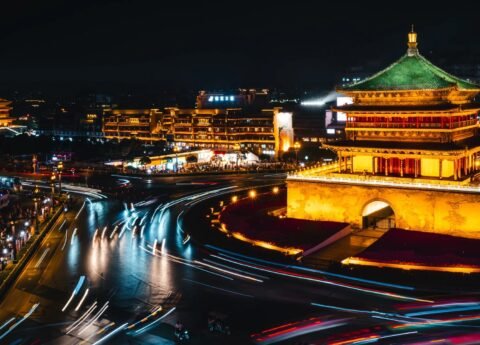
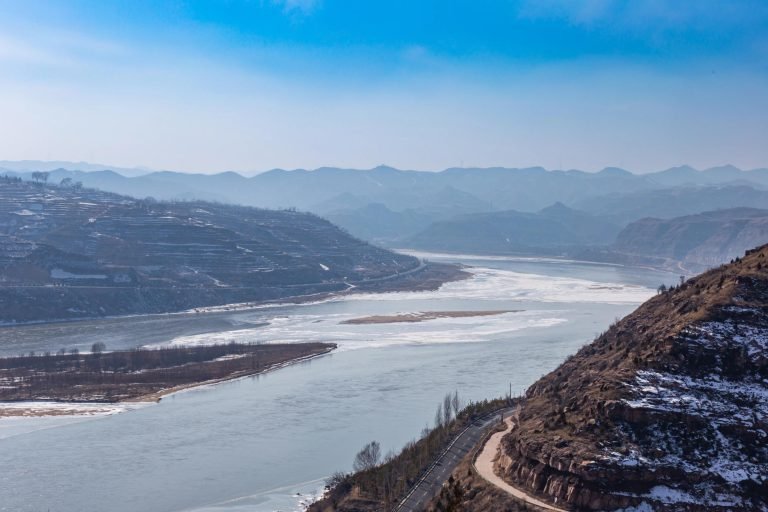
The phrase Yunnan secret villages is, at first glance, a familiar travel promise — the implication of hidden places, of roads not taken, of a China that exists beyond the polished visitor infrastructure of Lijiang’s canal streets and Dali’s café-lined ancient town. In Yunnan, the promise is real. The province is large enough — roughly the size of France — and complex enough in its ethnic and geographic layering that the standard tourist circuit, however thoroughly executed, skips the majority of what is actually here. But the phrase “secret village” also misrepresents, slightly, what the discovery of such a place actually requires. It is not speed and determination. It is not an aggressive off-road itinerary or a refusal to stay anywhere comfortable. It is time. It is the willingness to remain in one valley for two days when the itinerary originally allocated one afternoon. It is the specific patience of slow travel — a philosophy that grew from the observation that the most significant things in a landscape reveal themselves not on the first pass but on the second morning, when you already know which lane leads to the salt well and which household has been curing ham since before your grandparents were born, and the village begins, incrementally, to let you in. These are the five Yunnan secret villages that reward that patience above all others — and the reasons each of them requires not just a private guide but a guide who understands that arriving is only the beginning.
✨ At a Glance
- The Core Reality in 2026: Five of Yunnan’s most extraordinary villages — Nuodeng, Tuanshan, Cizhong, Benzilan, and Shuanglang — remain almost entirely absent from international-market tour itineraries despite holding cultural and architectural heritage of UNESCO-grade significance; reaching and absorbing each one requires a private vehicle, a guide with local relationships, and a minimum of two nights rather than one.
- Crucial Advice: The slow travel principle — a minimum of two full days per village, structured around morning market hours, agricultural rhythms, and the social time that builds trust between visitor and community — produces a qualitatively different encounter with rural Yunnan than any multi-stop itinerary; the traveler who spends six days across two villages leaves knowing more about Yunnan than the traveler who spends six days across six.
- The Xiora Solution: Xiora Travel’s slow travel Yunnan itineraries are built around the specific villages that reward extended stays — with private accommodation within or immediately adjacent to each community, guides who have spent years developing relationships with the families, craftspeople, and religious figures who constitute the village’s living heritage, and zero shopping stops at any point in the journey.
The Art of Slow Travel: Why Yunnan’s Villages Demand a Different Pace
Slow travel is not travel that is slow. It is travel that is patient — that accepts the village’s own schedule rather than imposing the itinerary’s, that treats a two-hour conversation with a salt-well keeper as a more valuable use of an afternoon than driving to the next landmark, that understands the difference between seeing a place and beginning to understand it. The Italian Slow Food movement, from which the slow travel philosophy partly descends, identified that the most important things in a food culture — the specific mineral content of a particular salt, the breed of pig that produces a specific cured meat, the micro-altitude difference between two adjacent vineyards — are visible only to the person who stayed long enough to ask the second and third question after the obvious ones had been answered. The same principle governs rural Yunnan with a precision that the province itself seems designed to reward.
Yunnan’s villages reveal themselves in layers. The first layer — the architectural layer of carved wooden screens, stone-paved lanes, and dynasty-stamped gate towers — is visible to any visitor with a camera and two hours. The second layer — the economic layer of how the salt well or the tin-mining fortune or the Tea Horse Road caravan income built each specific compound — becomes accessible by the second morning, when the village has registered your continued presence and the guide has introduced you to the family who maintained the account books. The third layer — the living layer of what the village is doing now, economically and spiritually, to sustain itself in a province whose infrastructure investment is transforming its valleys faster than its cultural memory can absorb — is available only to the traveler who chose to stay, in the specific and unhurried way that the village’s own schedule required. This is the art that the title names: not the art of moving slowly, but the art of arriving at the correct depth.
Five Yunnan Secret Villages That Reward the Slow Traveller
1. Nuodeng (诺邓) — The Village That Salt Built and Time Preserved
Nuodeng Ancient Village sits tucked into the mountains of Yunlong County, two hours north of Dali, on a hillside that looks, at first approach, like any other terraced Bai settlement in western Yunnan: white-plastered walls, grey tile roofs, stone lanes descending in irregular steps toward a valley floor. What distinguishes Nuodeng from every other Bai village in the province is buried beneath it. The ancient salt well at the village’s base has been in operation for over 2,300 years — its mineral-rich brine rising from a geological formation that the Han Dynasty administrators recorded in 109 BCE, that the Tang Dynasty scholars described in the Man Shu (《蛮书》, “Book of the Southern Barbarians”), and that the Nanzhao Kingdom, the precursor to the Dali Kingdom, made famous when its king — having tasted a ham cured in Nuodeng salt and mud — declared it a royal tribute. The wooden salt-lifting frames and iron boiling pots are still in place at the well’s mouth. On winter mornings, when the salt is boiled before the air has warmed, the steam rises in columns that have been rising in columns from this exact spot, in this exact landscape, since before Rome built its first aqueduct.
The village that the salt sustained is a designated Chinese Historical and Cultural Village (中国历史文化名村) of extraordinary intactness. Three to four hundred households, distributed across the valley floor and the northwest-facing slopes, are connected by stone lanes worn smooth by centuries of foot traffic, horse hooves, and the specific shuffle of salt carriers. Every household in Nuodeng still raises horses — a functional reminder of the horse caravans that carried Nuodeng salt westward through the Hengduan Mountains toward Tibet and Myanmar along the Salt Horse Road (盐马古道), a predecessor of the better-known Tea Horse Road. The Qing Dynasty Confucian temple on the village’s upper terrace, the five-roofed courtyard compounds whose timber screens are carved with the bat-and-peach motifs of Han auspiciousness, and the Salt Museum at the village entrance — which documents the social hierarchy that the salt industry produced, from the well-keeper families at the top to the itinerant salt boilers at the bottom — together constitute a portrait of a pre-industrial economy so complete that it requires only a guide who can read the evidence to make it fully legible.
The specific element of Nuodeng that converts a day visit into a two-night necessity is the ham. Nuodeng Ham (诺邓火腿) — produced from the Nuodeng Black Pig (Nuodeng hēi zhū, 诺邓黑猪), raised free-range on wild mountain plants before a final fattening period, and cured for a minimum of three years in the mineral-rich salt from the ancient well with a specific clay-mud coating that controls humidity and develops the flavour — is one of the most celebrated cured meats in China, compared by food critics to Spanish Ibérico and Parma prosciutto, and almost entirely unavailable outside the village itself at genuine quality. A Xiora guide will introduce you to the family whose curing cellar holds hams in various stages — one year, two years, three years — and who will cut a paper-thin slice from each for the tasting comparison that reveals, as clearly as any wine vertical, the relationship between time and flavour that the slow travel philosophy is built on. The winter before Spring Festival is the traditional curing season; a Nuodeng visit in January or February allows observation of the entire process, from the slaughter and cleaning of the pig to the salt application and the first hanging in the cellar, and the guide can arrange for your party to assist in the salt-rubbing step — an act of participation that connects you to a 1,300-year food tradition with your hands rather than your camera.
2. Tuanshan (团山) — The Qing Dynasty Village That a Mining Fortune Built
Thirteen kilometres from Jianshui’s ancient town along a road that has no English signage and no tourist coaches, Tuanshan Village is among the most architecturally extraordinary communities in Yunnan and among the least visited by international travelers. The village was built almost entirely between 1875 and 1920 by a single extended family: the Zhang clan of Jianshui County, whose members — having migrated in the late 19th century to the tin-mining districts of what was then French Indochina (northern Vietnam) — accumulated substantial fortunes and returned to their ancestral home to construct, compound by compound, a residential complex whose scale and quality of craftsmanship reflects both the profits of the Indochina tin trade and the social ambitions of a family that understood that a magnificent home in rural Yunnan was a more durable expression of status than any amount of investment in a colonial commercial city. The earthen fortress (土围子) architecture of Tuanshan — thick rammed-earth perimeter walls, crenellated gate towers, internal courtyard compounds decorated with carved wooden screens, painted plaster medallions, and stone inscription steles — received a UNESCO Asia-Pacific Heritage Award for Cultural Heritage Conservation in 2005, one of the few residential village complexes in southwestern China to have been recognised at that level.
The slow travel case for Tuanshan is architectural and genealogical simultaneously. A single day in the village covers the main compound circuit and the gate tower views across the surrounding rice fields. A second day opens the archive: the Zhang family descendants who still live in the village have, in several households, maintained the original account books, genealogical records, and correspondence of the Indochina trading period — documents that, with a guide who can read classical Chinese business notation, provide a direct window into the specific economic mechanisms of late Qing Dynasty international trade that produced the carved wooden ceilings above your head. The guide’s relationship with one particular household — the last Zhang family member to have worked in the compound’s original function as a guest hall for the trading network — allows a private viewing of a room that is not on the public circuit and whose walls retain the original hand-painted murals that document, in pictographic form, the family’s commercial geography from Jianshui to Hanoi.
3. Cizhong (茨中) — Where Tibetan Catholics Make Wine for the Mass
Cizhong is one of the most quietly extraordinary communities in China and possibly the most difficult to describe to anyone who has not visited it: a small village on the right bank of the Mekong River in the northern Yunnan highlands, located within the Three Parallel Rivers UNESCO World Heritage zone, whose inhabitants are approximately 80% Catholic — a faith delivered by missionaries from the Missions Étrangères de Paris (MEP, the Society of Foreign Missions of Paris) who first arrived in the Mekong Valley in 1867 and whose presence transformed a community of Lisu, Yi, and Tibetan villagers into one of the most theologically and culturally syncretic communities in the world. The MEP missionaries built their first church near Cizhong in 1867. The Tibetan Buddhist community, regarding the Christian mission as an intrusion, destroyed it during the Tibetan Revolt of 1905. The missionaries — those who survived — rebuilt it in the centre of Cizhong village between 1909 and 1921, a 12-year construction that produced a building architecturally unlike anything else in Yunnan: a Gothic-Romanesque stone church with Chinese glazed-tile pavilions added to the tops of its bell towers, its exterior simultaneously legible as European ecclesiastical architecture and as classical Chinese vernacular, standing in a landscape of Mekong River gorge and high-altitude terrace farmland that looks, in certain lights, like a Tibetan painting of a French provincial landscape.
The villagers of Cizhong were not converted so much as they were absorbed: the Catholicism that survived the expulsion of the foreign missionaries in 1950 and sustained itself through the Cultural Revolution in near-complete isolation is a Tibetan Catholicism — one where mass is conducted in Tibetan, where the congregation attends Christmas in traditional Tibetan dress, where the Buddhist neighbours participate in the Christmas celebration and the Catholic households celebrate the Tibetan New Year. The vines that the French missionaries planted on the Mekong valley slopes over 150 years ago for the wine of communion continue to produce grapes that the villagers press, ferment, and bottle — partly for mass, partly for sale to neighbouring villages — in a wine-making tradition that is simultaneously a sacramental obligation and an agricultural inheritance. A Xiora guide who has the trust of the village priest can arrange for your party to attend Sunday mass — with appropriate cultural briefing and the specific comportment that the occasion demands — an experience that combines the architectural beauty of one of China’s most unusual religious buildings, the acoustic richness of a Tibetan-language liturgy, and the specific human warmth of a community that has maintained its faith in extreme isolation for over a century.

4. Benzilan (奔子栏) — The Thangka Village on the Road to Tibet
Benzilan sits on the Yunnan-Tibet Highway (National Highway 214) at the point where the road from Shangri-La descends to the Jinsha River — the upper Yangtze — before climbing again toward Deqin and the Meili Snow Mountain massif. It is a Khampa Tibetan trading village that has occupied this river crossing for centuries as a waypoint on the Ancient Tea Horse Road, and it retains the specific confidence of a community that has always known its own geographic importance: the houses are larger than the average Tibetan village, the prayer flags more densely strung between the eaves, the butter-tea urns more prominently displayed in the household shrines. What distinguishes Benzilan from the dozens of other Khampa villages along this corridor is its thangka painting tradition. Thangka — the elaborate Buddhist iconographic paintings produced on cotton or silk that function as both devotional objects and theological instruction manuals — are produced in Benzilan by painters whose technical lineage traces through generations of village masters, and whose work is distributed throughout the Tibetan Buddhist communities of Yunnan, Sichuan, and Tibet proper. The Songtsam Lodge Benzilan — a 12-room property overlooking the Jinsha River gorge, operated by the Songtsam family group whose other lodges in Shangri-La, Tacheng, and Cizhong constitute the finest small-hotel network in northwest Yunnan — provides the base for a two-night Benzilan stay that includes a private session with one of the village’s senior thangka painters: a 90-minute tutorial in the iconographic grammar of Tibetan Buddhist painting that, once absorbed, transforms every thangka encountered subsequently from decorative object into legible text.
The guide’s role in Benzilan is cultural translation at its most specific and most irreplaceable. The Khampa Tibetan spoken in the village is distinct from the Lhasa Tibetan that most Tibetan-language guides are trained in; the particular religious sectarian affiliation of the village’s main monastery (Karma Kagyu, a sub-school of the Kagyu lineage) determines which iconographic traditions the local thangka painters prioritise; and the specific historical relationship between Benzilan and the Cizhong Catholic community 30 kilometres downstream — Tibetan Buddhist and Tibetan Catholic neighbours on the same river, with centuries of peaceful coexistence and occasional doctrinal argument — is the kind of nuanced local history that a guide with genuine roots in northwest Yunnan carries as personal knowledge rather than research.
5. Shuanglang (双廊) — The Artist’s Village Where Erhai Lake Breathes
Shuanglang occupies the eastern shore of Erhai Lake — Yunnan’s second-largest plateau lake, 250 square kilometres of high-altitude freshwater that the Bai people have fished, sailed, and built their lives around for 2,000 years — at a position that receives the lake’s best afternoon light: a wide-angle west-facing view across the full breadth of the water toward the Cangshan mountain range, whose 19 peaks hold snow until May and whose reflection in the lake at dusk produces a double image of equal grandeur. The village itself is a cluster of traditional Bai courtyard compounds — white-plastered walls with painted coloured borders in the Bai decorative tradition, ornate gate towers, internal courtyards of persimmon trees and goldfish ponds — that a small community of painters, ceramicists, and writers began occupying in the 1990s as the more accessible Dali Old Town grew commercially crowded. Since 2018, when the Yunnan government imposed strict motorboat restrictions on Erhai Lake to address decades of algal pollution, the lake has recovered a clarity and a silence that has made Shuanglang’s eastern-shore position — facing the full expanse of clean water — the most quietly beautiful vantage point available anywhere in the Dali region. The artist community that settled here, and whose studios and galleries are distributed between the traditional Bai residential compounds in a way that respects the architectural grammar of the village, has attracted in turn a specific kind of culturally curious traveler for whom the combination of Bai heritage architecture, contemporary Chinese art, and lakeside silence constitutes a more compelling destination than Dali Old Town’s souvenir streets.
The slow travel argument for Shuanglang is a sunset argument, primarily: the lake is most beautiful at the hour before dusk and for 20 minutes after it, and the correct place to be during this window is on a traditional Bai wooden boat in the middle of the lake, a distance from shore that makes the reflection of the Cangshan peaks in the water mathematically perfect. The guide arranges the boat, manages the departure timing relative to the light, and knows which of the village’s Bai fishermen — the ones still working the original hand-net fishing methods rather than the motorised boats that the 2018 restrictions have largely displaced — will be returning to the eastern shore jetty at the moment the light is best. This is not a chartered sunset cruise. It is a working boat, returning from work, at the specific moment the lake performs. The guide’s relationship with the fisherman’s family, and the appropriate consideration paid for the use of the boat’s deck for 40 minutes, is the infrastructure of the encounter — invisible to the traveler, essential to its quality.
“The traveler who spends two days in Nuodeng and one day in Nuodeng leaves the same village. But only the traveler who stayed for two days knows whose grandmother still rubs the salt into the ham by hand, and why the third year of curing tastes like something that cannot be rushed.”
Yunnan Secret Villages: Standard Multi-Stop Tour vs. Xiora Slow Travel Private Experience
| Feature | Standard Multi-Stop Yunnan Tour | Xiora Slow Travel Private Experience |
|---|---|---|
| Village Selection | Lijiang, Dali, Shaxi — the established circuit; Nuodeng, Tuanshan, Cizhong entirely absent | Itinerary built around the five villages that reward extended stays; circuit designed around cultural depth, not logistical efficiency |
| Time Per Village | 2–4 hours per stop; 1 night maximum; primary layer of architecture only | 2 nights minimum per village; guide uses Day 2 for second-layer encounters: family introductions, workshops, archives |
| Access to Nuodeng Ham | Village not visited; ham available as tourist product in Dali markets at inflated non-authentic prices | Guide introduces curing family; private cellar tasting across 1-year, 2-year, and 3-year vintages; January option to assist in salt-rubbing process |
| Cizhong Mass Access | Village not visited; Tibetan Catholic tradition entirely unknown to most operators | Guide’s relationship with village priest enables Sunday mass attendance with proper cultural briefing; mass wine tasting optional |
| Tuanshan Architecture | Not on any standard international itinerary; 13km from Jianshui with no tourist infrastructure | UNESCO Asia-Pacific Heritage Award compound circuit plus private access to Zhang family historical archives with guide interpretation |
| Erhai Lake Experience | Tourist boat from Dali; standard route; motorised; no sunset positioning | Fisherman’s working boat from Shuanglang jetty at guide-timed dusk hour; hand-net fishing tradition observed; Cangshan double-reflection positioned |
| Shopping Stops | Marble craft workshops, Bai tie-dye showrooms, silver emporiums — 3–5 per week | Zero; guide advises on direct-from-artisan purchases at genuine prices only if requested — Benzilan thangka, Nuodeng ham, Cizhong wine |

Planning a Slow Travel Yunnan Itinerary: Practical Intelligence for 2026
How Long Each Village Requires
The slow travel principle applied to Yunnan secret villages produces a specific minimum-stay recommendation for each destination: Nuodeng, two nights (one day for the village circuit and salt well, one day for the ham curing family and the Salt Horse Road trail above the village); Tuanshan, one night with a full day (its compact scale makes two nights unnecessary, but it cannot be done justice as a half-day excursion from Jianshui); Cizhong, two nights minimum, ideally including a Sunday for mass attendance (the four-hour drive from Shangri-La justifies an extended stay; the Mekong Valley landscape and the vine-covered slopes reward morning walks not possible on a one-night schedule); Benzilan, two nights at Songtsam Lodge (one day for the village and thangka workshop, one day for the river gorge hike and the Karma Kagyu monastery); Shuanglang, two nights (one day for the Bai village and gallery circuit, one sunset on the lake, one morning walk before the day-trip visitors arrive from Dali). A complete slow travel circuit across all five villages requires 12–14 days minimum, and rewards 16.
When to Go
Each village has an optimal seasonal window. Nuodeng is best in January and February — the curing season, when the slaughter and salt-rubbing rituals are happening and the cellar visits are most atmospherically resonant; the village is cold but clear-skied. Tuanshan is best in the harvest months of September and October, when the rice fields surrounding the Zhang family compounds are gold and the architecture’s relationship with its agricultural landscape is most legible. Cizhong is best visited in December, when the Christmas mass takes place — a once-yearly event of extraordinary cultural complexity, and the only occasion on which the full Tibetan Catholic community gathers in the church simultaneously; advance arrangement through Xiora is essential for this visit. Benzilan is best in October and November, when the Jinsha River gorge is clear, the thangka painters are working through their most productive season, and the Meili Snow Mountain to the north is reliably visible on clear mornings. Shuanglang is best in March and April, when the lake is at its cleanest after winter and the Cangshan peaks still carry snow.
How to Integrate Secret Villages Into a Wider Yunnan Itinerary
The five villages map onto the standard northwest Yunnan circuit — Kunming, Dali, Shaxi, Lijiang, Shangri-La — as depth extensions rather than route diversions. Nuodeng is 2 hours north of Dali by private vehicle and slots naturally into a Dali–Shaxi–Lijiang routing as an additional 2-night component. Tuanshan is 13km from Jianshui, itself a full-day addition to the southern Yunnan leg of any itinerary that includes Yuanyang. Cizhong, Benzilan, and Shuanglang all exist within the northwest Yunnan mountain corridor that connects Shangri-La to Deqin — a stretch of the Yunnan-Tibet Highway that the standard Shangri-La tourist itinerary treats as a transit route but that a slow travel private itinerary treats as the destination itself. A Xiora consultant designing a 14-day slow travel Yunnan itinerary will integrate these villages into the routing in a sequence that minimises backtracking, maximises altitude and landscape variety across the journey, and allocates the specific number of nights at each village that its cultural depth rewards.
Travel Without the Friction
At Xiora Travel, our expert bilingual guides handle every logistical detail, ensuring a seamless, 100% no-shopping luxury experience. Your time belongs to the journey.
Explore Private Journeys ↗What the Second Day Always Finds
There is a moment, in each of these five villages, that arrives specifically on the second morning and not on the first. In Nuodeng, it is the walk to the salt well at 07:00 when the steam is rising and the keeper’s son is checking the brine level with a calibrated float that his grandfather used before him, and he nods at your guide — a nod of recognition, not performance — and continues without commentary. In Tuanshan, it is the room behind the guest hall where the painted murals have not been restored and the original Qing Dynasty pigments are fading in patterns that are simultaneously loss and evidence. In Cizhong, it is the sound of the liturgy through the church’s thick stone walls at 09:00 Sunday, reaching the courtyard where you are sitting with your tea, in Tibetan, from the throats of people whose faith has survived 70 years of institutional opposition with a composure that the architecture around you was built to house. In Benzilan, it is the thangka painter at her work before the light has changed, adding gold leaf to a halo with a brush made from a single cat’s whisker, in a silence that the second day has earned. In Shuanglang, it is the lake at 06:30 before the day-trip boats arrive from Dali, flat and still and so clear that the Cangshan reflection is more defined than the mountains themselves.
None of these moments is on the itinerary. All of them are the reason the Xiora slow travel Yunnan itinerary was built around staying long enough to find them — and around a guide whose job is not to show you what the village has prepared for visitors, but to be present when the village simply goes about its morning.
Frequently Asked Questions
What are the most underrated villages in Yunnan that tourists miss?
The five most consistently underrated villages in Yunnan — in terms of the quality of cultural and heritage experience they offer relative to their visitor numbers — are Nuodeng (a 2,300-year-old salt village in Yunlong County whose Nuodeng Black Pig ham is considered one of China’s finest cured meats), Tuanshan (a late Qing Dynasty merchant village 13km from Jianshui, winner of a UNESCO Asia-Pacific Heritage Conservation Award in 2005), Cizhong (a Tibetan Catholic village on the Mekong River whose French-built church dates to 1867 and whose congregation has maintained its faith through over 70 years without foreign clergy), Benzilan (a Khampa Tibetan thangka-painting village on the Yangtze gorge between Shangri-La and Deqin), and Shuanglang (a Bai fishing village on the eastern shore of Erhai Lake, best experienced at dusk from a traditional boat on a lake restored to clarity since 2018’s motorboat restrictions). All five require a private vehicle and a guide with local relationships; none appears on standard group-tour itineraries.
What is slow travel and why does it work particularly well in Yunnan?
Slow travel is the practice of spending more time in fewer places — prioritising depth of encounter over breadth of coverage, and calibrating the itinerary around the destination’s own rhythms rather than the traveler’s departure schedule. It works particularly well in Yunnan because the province’s most significant cultural experiences are time-dependent: the Nuodeng ham curing ritual happens in January and February; the Cizhong Christmas mass happens once a year; the Erhai Lake sunset reflection performs for 40 minutes at dusk; the thangka painter in Benzilan is not available between 14:00 and 16:00 when she attends her afternoon prayer practice. Yunnan rewards the traveler who has arranged to be in the right place at the right time — which is possible only on a private itinerary with a guide who understands the village’s calendar well enough to design around it. The standard multi-stop tour, by allocating one afternoon per village and moving on before the second morning, consistently misses the layer of experience that the slow travel approach specifically arrives at.
How do I visit the Cizhong Catholic church and attend mass as a foreign visitor?
The Cizhong Catholic church is open to visitors at all times; the village itself is freely accessible to foreign travelers and requires no special permit beyond the standard China visa (or visa-free entry applicable to your nationality). Sunday mass is conducted in Tibetan and is open to visitors who attend with appropriate comportment — seated quietly at the back, modestly dressed, and respectful of the liturgy’s duration and pace. The Xiora guide’s relationship with the resident village priest enables an advance introduction and a pre-visit cultural briefing covering the specific history of Tibetan Catholicism in the Mekong Valley, the MEP missionary period, the 1905 destruction and 1909–1921 reconstruction, and the theological and social mechanisms that have sustained this community’s faith for over 150 years in isolation. The mass wine — produced from grapes grown on the valley slopes from vines planted by the original French missionaries — is available for tasting after mass by arrangement with the priest, in a context of respectful cultural exchange rather than tourist consumption. The Cizhong visit is accessible as a 2-night extension from Shangri-La on any northwest Yunnan private itinerary; the Yunnan-Tibet Highway (National Highway 214) connects Shangri-La to Cizhong via Benzilan in approximately 4 hours by private vehicle.