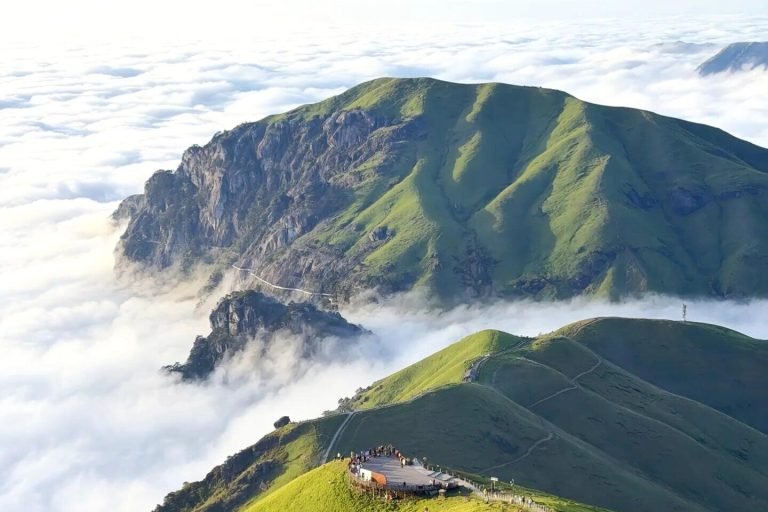
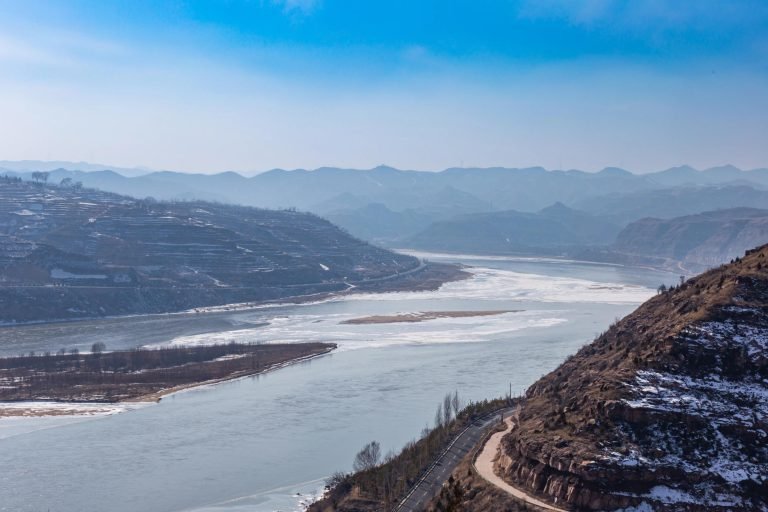
Yunnan travel — and the arc from Dali to Lijiang to Shangri-La in particular — is China’s most scenically and ethnically astonishing journey, and in 2026 it remains one of the few routes in the country where the landscape itself does most of the work. In the space of roughly 350 kilometres, a private vehicle climbs from the subtropical valley floor at 2,000 metres, past the cobblestone lanes of a UNESCO-listed Naxi minority town, up through one of the world’s deepest canyons — Tiger Leaping Gorge, where the Jinsha River forces itself between walls of rock 3,790 metres high — and then levels, finally, onto the high Tibetan plateau at Shangri-La, where juniper smoke drifts over crimson monastery walls and yaks graze on meadows dusted with frost. The journey takes seven to ten days done properly. Most group tours attempt it in four, skipping what matters most. This is the guide for those who want to understand what they are actually looking at.
✨ At a Glance
- The Core Reality in 2026: The Dali–Lijiang–Shangri-La corridor spans 350 kilometres and three distinct altitude bands (2,000m → 2,400m → 3,200m), passing through the territories of the Bai, Naxi, and Tibetan ethnic minorities — three entirely distinct cultures, cuisines, and architectural traditions within a single itinerary arc.
- Crucial Advice: Altitude sickness is a genuine planning consideration at Shangri-La (3,200m) and Pudacuo National Park (3,500m+) — most travellers require at least one rest day upon arrival; the Banyan Tree Ringha and Songtsam Benzilan lodges both maintain on-site oxygen facilities and traditional Tibetan altitude teas for acclimatisation.
- The Xiora Solution: Xiora Travel sequences this circuit as a 100% private, no-shopping itinerary paced to match altitude acclimatisation, with a dedicated bilingual guide for the full arc, private vehicles throughout, and preferred access to Songzanlin Monastery’s inner prayer halls and private lama dormitories not normally accessible to independent visitors.
Why Yunnan Travel Belongs on Every Serious China Itinerary
Yunnan — whose name translates loosely as “South of the Clouds” — is China’s most biodiverse province, sharing borders with Myanmar, Laos, and Vietnam, and containing within its 394,000 square kilometres more plant species than the whole of North America. It is also the country’s most ethnically diverse region: twenty-five of China’s fifty-five officially recognised ethnic minorities have their majority populations here, including the Bai people of Dali, the Naxi of Lijiang, the Tibetan communities of Shangri-La, and dozens of smaller groups whose languages, weaving traditions, and ceremonial calendars have survived largely intact. For the traveller who wants to understand China’s depth rather than simply its scale, Yunnan offers something unavailable anywhere else in the country: genuine cultural plurality, in a landscape of mountain and lake and gorge that has shaped each of those cultures over millennia.
The province is also the site of one of geography’s great coincidences: in the area now designated a UNESCO World Heritage Site, the Yangtze, Mekong, and Salween Rivers — three of Asia’s great waterways — run parallel to each other within 65 kilometres for hundreds of kilometres, compressed by the collision of the Indian and Eurasian tectonic plates into some of the deepest gorges on earth. Tiger Leaping Gorge, where the Jinsha River (upper Yangtze) squeezes between Jade Dragon Snow Mountain and Haba Snow Mountain, is the most accessible expression of this geology — and one of the most visually dramatic landscapes anywhere in Asia.
“In Yunnan, the light changes quality at every altitude — the flat gold of Erhai Lake at dusk bears no resemblance to the cold silver of a Tibetan plateau morning, and both are unlike anything you will find in the rest of China.”

Dali: The Bai Heartland Between Mountain and Lake
Dali sits at 2,000 metres on a flat plain between two of the most photogenic natural features in Yunnan: the twenty-peak Cangshan mountain range, which holds snow on its higher ridges even in May, and Erhai Lake — its name meaning “Ear Sea,” after the lake’s elongated shape — a freshwater body 42 kilometres long whose western shore runs in a near-continuous Bai minority village chain. The city has been inhabited for over three thousand years, served as the capital of the Nanzhao and Dali Kingdoms between the 8th and 13th centuries, and became, in the 1990s, one of China’s first “foreigner-friendly” destinations before gradually transforming into something considerably more interesting: a town with genuine Bai cultural infrastructure, an extraordinary natural setting, and a slow-paced residential quality that resists the complete touristification that has overtaken parts of Lijiang.
What to experience in Dali
The Three Pagodas of Chongsheng Temple — three Tang-dynasty stone towers dating to the 9th century, arranged in a symmetrical triangle on the plain below Cangshan — are Dali’s most recognised landmark and deservedly so: their proportions, reflected in the rectangular pool that fronts the complex at dawn, make for one of the most composed architectural panoramas in all of southern China. The Chongsheng Temple complex behind them sprawls across a four-kilometre site and merits more time than most visitors give it.
The more rewarding Dali, however, lives in the villages along Erhai Lake’s western shore. Xizhou, a fifteen-minute drive north of the Old Town, is a Bai merchant village whose grand courtyard mansions — built during the Qing dynasty by Bai traders who accumulated fortunes on the Tea Horse Road — survive in a remarkable state of preservation. A private morning in Xizhou, timed for the open-air market that draws villages from across the surrounding countryside, followed by a San Dao Cha (Three-Course Tea ceremony, the Bai traditional tea service that moves from bitter to sweet to memorable in three successive bowls) in a restored courtyard compound, forms one of the most quietly satisfying mornings available anywhere on the Yunnan circuit.
Zhoucheng, further north, is the centre of Yunnan’s traditional tie-dye production — a technique using Bai-developed indigo-resist dying methods that dates back to the Tang dynasty and continues as a living craft rather than a museum demonstration. A private workshop session here — with a practising craftsperson, not a tourism performance — is the kind of experience that Xiora’s network of local contacts makes accessible to clients who would otherwise encounter only the curated version.
An afternoon cycling the 27.5-kilometre Ecological Corridor along Erhai’s western shore, past fishing villages and vegetable plots and the occasional heron standing motionless in the shallows, closes a Dali day with the sensory register that the destination does best: slow, luminous, and vaguely improbable in its beauty.
| Feature | Standard Group Tour | Xiora Private Standard |
|---|---|---|
| Pacing | Dali–Lijiang–Shangri-La in 4 days; rushed | 7–10 days with rest days built around altitude acclimatisation |
| Accommodation | Chain 4-star hotels in city centres | Banyan Tree Ringha, Songtsam lodges, Alila-tier boutique properties |
| Tiger Leaping Gorge | Roadside viewpoint stop, 20 minutes | Private upper gorge hiking, gorge-rim picnic, dedicated vehicle throughout |
| Songzanlin Monastery | Public entry, group queue at main hall | Private access to lama dormitory and inner prayer halls; guide-facilitated conversation with resident monk |
| Shopping Stops | Mandatory jade, silver, and Yunnan tea shops | Zero — contractual no-shopping guarantee |
| Altitude Preparation | Not addressed | Acclimatisation schedule built in; O₂ facilities at Shangri-La properties; altitude medicine briefing pre-tour |
Lijiang: The Naxi Ancient Town Beneath Jade Dragon Snow Mountain
Lijiang Old Town — Dayan, in the Naxi language — was designated a UNESCO World Heritage Site in 1997, recognised for its extraordinarily intact system of interlocking canals, cobblestone lanes, and wooden-fronted Naxi courtyard architecture. At 2,400 metres, the air carries a sharpness that clarifies the colour of everything: the grey of the roof tiles, the red-brown of the timber facades, the cold blue of the Black Dragon Pool that mirrors Jade Dragon Snow Mountain — a 5,596-metre peak perpetually capped in snow and visible from almost every corner of the old town on a clear morning.
The Naxi people who built and inhabit Lijiang maintain one of the world’s few surviving pictographic writing systems — Dongba script, a living hieroglyphic language used for ceremonial texts and still practised by Dongba priests — and a musical tradition, Naxi Ancient Music, that preserves Tang and Song dynasty court compositions lost everywhere else in China. A private evening with the Naxi Ancient Music orchestra — a dozen musicians averaging over seventy years of age, performing on instruments whose designs have not changed in a thousand years — is one of the most profoundly moving cultural experiences available in southwest China, and one that Xiora arranges for clients with a serious interest in Chinese musical heritage.
Beyond the old town: Black Dragon Pool and Jade Dragon Snow Mountain
Black Dragon Pool Park, a fifteen-minute walk from the old town, offers the postcard image of Lijiang: the Five Phoenix Pavilion reflected in still water, with Jade Dragon Snow Mountain rising behind it in a single unbroken vertical thrust. The park is busiest between 9am and 11am; arriving before 8am or after 4pm transforms it into something approaching solitude. A cable car from the base of Jade Dragon Snow Mountain carries visitors to 4,506 metres — high enough to walk on permanent glacial ice — though the altitude demands care, and Xiora builds a mandatory acclimatisation day at Lijiang elevation before arranging any high-altitude excursion.
The Baisha frescoes at Fuguo Temple, twelve kilometres north of the old town, deserve their own morning: a series of Yuan, Ming, and Qing dynasty Buddhist and Taoist murals, painted on the interior walls of a complex of small temples and covering subjects ranging from tantric deities to agricultural calendars, that have survived five centuries in almost miraculous condition. They are visited by perhaps a thousand people in a year, in a town whose old town receives several million.

Shangri-La: Tibet Without a Permit, at the Edge of the Plateau
Shangri-La — the city formerly named Zhongdian, renamed in 2001 after James Hilton’s fictional utopia — sits at 3,200 metres on the southern edge of the Tibetan Plateau in Diqing Tibetan Autonomous Prefecture. The renaming was an act of creative place marketing that has since been somewhat vindicated by the destination itself: the Dukezong Ancient Town, a 1,300-year-old Tibetan enclave of whitewashed stone houses, incense-fragrant prayer halls, and cobbled streets navigated by monks in crimson robes, does bear a resemblance to the otherworldly calm that Hilton was imagining. The surrounding landscape — high meadows grazed by yak herds, alpine lakes reflecting snow-capped peaks, the distant silhouette of Meili Snow Mountain (Kawagarbo, 6,740m, sacred to Tibetan Buddhism and never successfully summited) on the clearest days — makes the altitude feel earned.
Songzanlin Monastery — The Little Potala Palace
Songzanlin Monastery, founded in 1679 by the Fifth Dalai Lama and housing roughly seven hundred monks across an extraordinary hilltop complex of gilded rooftops, courtyard temples, and whitewashed residential buildings, is Yunnan’s largest Tibetan Buddhist institution and one of the most architecturally commanding religious sites in all of southwest China. The main prayer hall contains a twelve-metre Sakyamuni Buddha entirely gilded, surrounded by ceiling-to-floor tangkas and the accumulated offerings of three centuries of pilgrimages. For the traveler arriving with a private guide who has genuine relationships within the monastery, access extends beyond the main halls: to the lama dormitories, where senior monks receive visitors for conversation in their personal studies; to the early morning puja (prayer ceremony), its chanting audible across the surrounding valley before dawn; and to the inner courtyard where the smell of yak butter lamps and pine resin incense defines the specific sensory signature of Tibetan ritual space.
Pudacuo National Park
Twenty-two kilometres southeast of Shangri-La, Pudacuo National Park protects an alpine ecosystem of almost unreasonable beauty: the Shudu and Bita Lakes, surrounded by virgin Yunnan pine and alpine meadow, lie at 3,539 and 3,538 metres respectively, in a setting whose silence — interrupted only by the wind through the pines and the sound of yak bells in the far distance — produces the specific quality of stillness that is altitude’s particular gift. The park operates a dedicated eco-vehicle circuit; Xiora arranges private vehicle access for clients where available, ensuring the lake circuits are walked at the traveler’s own pace rather than a timed shuttle schedule.
Travel Without the Friction
At Xiora Travel, our expert bilingual guides handle every logistical detail, ensuring a seamless, 100% no-shopping luxury experience. Your time belongs to the journey.
Explore Private Journeys ↗How to Move Between Dali, Lijiang, and Shangri-La in 2026
Unlike China’s eastern megacity corridor — where the Fuxing CR400 bullet train dominates intercity movement — the Yunnan arc is best navigated by private vehicle for all legs north of Lijiang, with domestic flights handling the long approach from the east. Here is how the logistics break down in 2026.
From most international origin points, the gateway is either Kunming Changshui International Airport (serving the majority of long-haul connections via Chinese hub carriers) or Lijiang Sanyi Airport, which receives direct domestic flights from Beijing Capital, Shanghai Pudong, and Guangzhou Baiyun. High-speed rail from Kunming to Dali takes approximately two hours on the Yunnan-Guizhou high-speed line — an extremely comfortable journey through Yunnan’s red-soil hill country, manageable in First Class when Business Class pods are unavailable on this regional route. For a more complete overview of domestic transport decisions across China, our guide to bullet trains versus domestic flights covers every major route comparison.
From Dali northward, private vehicle takes over entirely. The Dali–Lijiang leg (approximately 180km, three hours with stops at Shaxi Ancient Town en route) is one of China’s finest private driving days — passing through Bai villages, the gorge of the Miju River, and the gradual revelation of Jade Dragon Snow Mountain on the northern horizon. The Lijiang–Shangri-La leg (approximately 185km, three to four hours by private vehicle) traverses Tiger Leaping Gorge and the Yangtze’s First Bend at Shigu, and should never be reduced to a single continuous drive: the gorge deserves a minimum of three hours of its own, either walking the upper trail section or descending to the lower gorge viewpoint where the river’s compressed force is most viscerally apparent.
A note on altitude and cash in remote Yunnan
At Shangri-La and in Pudacuo, both Alipay and WeChat Pay function reliably for most vendors. However, in remote valley villages and at informal guesthouses near Tiger Leaping Gorge, cash (RMB) remains the preferred medium. Our full guide to navigating cashless China and the Great Firewall in 2026 notes that Yunnan’s rural highland areas are precisely the context where an emergency RMB float — which Xiora guides maintain at all times — proves most useful. Altitude also affects digital payment systems differently than most travellers expect: phone batteries drain approximately thirty percent faster above 3,000 metres in cold conditions. Portable power banks are not optional at Pudacuo in autumn and winter.
Best Time to Visit the Yunnan Circuit in 2026
Yunnan’s climate varies dramatically by elevation, and the “best time” calculus therefore differs across the arc’s three destinations.
- March to May (Spring): The finest season for Dali and Erhai Lake, when the camellia and cherry blossom are in flower along Cangshan’s lower slopes and the lake surface reflects an unclouded blue sky. Lijiang Old Town is at its most photogenic. Shangri-La remains cold (night temperatures still reach -5°C in March) but the high-plateau wildflowers begin in late April. Avoid the five-day May Day Golden Week (1–5 May) entirely — visitor volumes at Tiger Leaping Gorge and Lijiang triple during this period.
- September to early November (Autumn): Arguably the peak season for the full circuit. Erhai Lake is glassy and warm; Jade Dragon Snow Mountain is at its clearest; the meadows around Songzanlin Monastery turn gold; Pudacuo’s alpine larch stands flame orange in October. Daytime temperatures at Shangri-La are mild (12–18°C), though nights drop sharply. The National Day Golden Week (1–7 October) must be avoided — Lijiang Old Town becomes functionally impassable.
- June to August (Summer): Yunnan’s rainy season, which brings the sea-of-clouds effects above Tiger Leaping Gorge and a particular lushness to the valley floors. Humidity at Dali and Lijiang is manageable; afternoon thunderstorms are reliable but short. Visitors prioritising landscape photography over crowds may find this season rewarding at altitude, where the light after rainfall is exceptional.
- December to February (Winter): Cold but extraordinarily clear. Snow dusts the Cangshan peaks and the Three Pagodas. Lijiang Old Town, stripped of peak-season crowds, reveals its architectural substance. Shangri-La is genuinely cold (-15°C possible at night) and requires serious layering, but the Songzanlin winter puja ceremonies — when the full residential monk population gathers for extended ritual chanting — are among the most powerful collective religious experiences in southwest China.
Practical Notes for Yunnan Travel in 2026
Several practical details specific to the Yunnan arc deserve explicit mention for high-net-worth travellers accustomed to frictionless travel in western destinations.
- Altitude medication: Acetazolamide (Diamox) is the standard pharmacological prophylaxis for altitude sickness and should be started forty-eight hours before ascending to Shangri-La. Consult a travel medicine physician before departure. Both the Banyan Tree Ringha and Songtsam lodges maintain supplemental oxygen available on request.
- Shaxi Ancient Town (optional stop): The village of Shaxi, midway between Dali and Lijiang along the old Tea Horse Road, is one of the most genuinely preserved Bai market towns in Yunnan — its Friday market, drawing hill-tribe traders from surrounding valleys, is a forty-five-minute detour well worth building into the transfer day.
- Tiger Leaping Gorge access in 2026: The upper gorge trail remains open and in excellent condition. The lower gorge viewpoint is accessible by private vehicle. The two-day trek from Qiaotou to Walnut Grove requires overnight accommodation at trail guesthouses — Xiora pre-books the best-positioned rooms for clients undertaking the full walk, with luggage transfer by vehicle.
- Payment in Yunnan: Alipay and WeChat Pay cover ninety-five percent of all transactions in Dali, Lijiang, and Shangri-La town centres. Carry approximately ¥1,000 RMB cash for Tiger Leaping Gorge guesthouses, Shaxi market vendors, and remote village stops. Your Xiora guide maintains a client emergency float at all times.
Frequently Asked Questions
How many days do I need for a Dali, Lijiang, and Shangri-La trip in 2026?
A minimum of seven days is required to do the Dali–Lijiang–Shangri-La circuit proper justice, and ten days is the comfortable benchmark for a genuinely immersive experience. A tight seven-day itinerary allocates two nights in Dali, two nights in Lijiang, and two nights in Shangri-La, with a full day at Tiger Leaping Gorge as the transfer experience between Lijiang and Shangri-La. A ten-day version adds a rest and acclimatisation day at Shangri-La, a full day at Pudacuo National Park, an optional extension to Songtsam Benzilan Lodge for the Tibetan highlands experience north of Shangri-La, and more generous time at Xizhou and Zhoucheng in the Dali orbit. Group tours that advertise Dali–Lijiang–Shangri-La in four days are compressing an experience that cannot be meaningfully compressed.
What is Tiger Leaping Gorge and is it worth visiting in 2026?
Tiger Leaping Gorge is a 15-kilometre canyon carved by the Jinsha River (upper Yangtze) between Jade Dragon Snow Mountain (5,596m) and Haba Snow Mountain (5,396m), with a vertical drop from rim to river of 3,790 metres — making it one of the deepest river gorges on earth. It is unambiguously worth the visit in 2026: the scale is genuinely difficult to process until you are standing at the gorge rim looking down at a river that appears, from that height, as a thin white thread. The two-day upper trail trek is widely considered one of the finest moderate hikes in China. For travellers not wanting to hike, the lower gorge viewpoint — accessible by private vehicle in under an hour from the trailhead — delivers an immediate and powerful impression of the gorge’s scale, with the sound of the Jinsha River audible from the viewing platform as a sustained thunder even at a distance of three hundred metres.
What is the best luxury hotel to stay at in Shangri-La in 2026?
The Banyan Tree Ringha, set in a complex of restored traditional Tibetan farmhouse lodges at the edge of the Ringha valley twelve kilometres from Shangri-La town, is the finest luxury property currently operating on the Yunnan Tibetan plateau circuit, combining genuine architectural authenticity (the lodge structures are converted and extended original farmhouses, not reproductions) with Banyan Tree’s characteristic spa and dining standards. For travelers extending the circuit northward toward the Tibetan heartland, the Songtsam Benzilan Lodge — part of the Songtsam group’s private circuit of twelve small lodges across the Tibetan plateau — offers a more intimate and logistically ambitious alternative, positioned at the Benzilan ferry crossing with views across the Mekong River. Both properties should be reserved six to twelve months in advance for the October peak season. Xiora Travel holds preferred relationships with both and can advise on availability as part of itinerary planning for your private China tour.