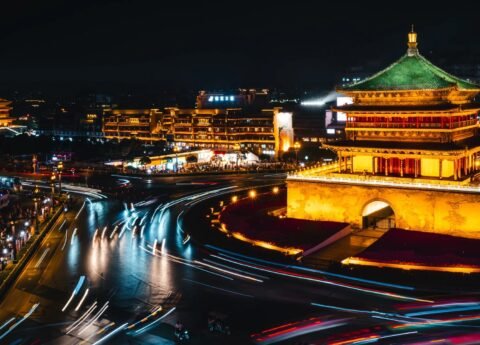
The question of whether China is safe for American tourists in 2026 deserves an honest answer — not a reassuring one, not a frightening one, but the kind of precise, layered answer that you would want from someone who has spent years leading private tours through Beijing’s hutongs, across the karst peaks of Guilin, and into the dusty, golden-lit passageways of Dunhuang. The short answer is yes: for ordinary leisure travelers visiting China’s major cities and classic cultural routes, China in 2026 is a country with lower levels of violent crime against tourists than most Western cities, a world-class infrastructure system, and a government that has invested considerable diplomatic and economic capital in welcoming high-value international visitors. The longer answer, however, demands nuance — because the risks that do exist for American travelers in 2026 are real, specific, and almost entirely different from the risks that travelers imagine when they first ask the question. This guide, written from the perspective of professionals based in China, addresses both.
✨ At a Glance
- The Core Reality in 2026: The U.S. Department of State rates China at Level 2: Exercise Increased Caution — the same designation applied to France, Germany, the United Kingdom, and Japan — meaning it is emphatically not a “do not travel” warning; violent crime against tourists on major routes (Beijing, Shanghai, Xi’an, Chengdu, Guilin) remains extremely low by global standards.
- Crucial Advice: The risks that actually affect American tourists in China are not muggings or terrorism — they are legal compliance issues (exit bans, visa conditions, device searches at borders), digital infrastructure gaps (WeChat Pay, VPN, Mandarin-only apps), and geopolitically sensitive conversations; all of these are managed effectively by a professional private guide who has navigated them for a decade.
- The Xiora Solution: Xiora Travel’s 100% private, no-shopping China itineraries include a comprehensive pre-departure safety briefing tailored specifically to American citizens — covering visa requirements, the State Department’s STEP enrollment program, border protocol, payment setup, and the specific behavioral guidelines that keep every client inside the lane of safe, uncomplicated tourism.
The U.S. State Department Advisory: What Level 2 Actually Means
The first thing most Americans encounter when researching a China trip is the U.S. Department of State’s China Travel Advisory, which as of April 2026 sits at Level 2: Exercise Increased Caution. The instinctive response to that phrase — “exercise increased caution” — is anxiety. The informed response is perspective.
The State Department uses a four-level system. Level 1 is “Exercise Normal Precautions.” Level 2 is “Exercise Increased Caution.” Level 3 is “Reconsider Travel.” Level 4 is “Do Not Travel.” China is at Level 2 — the same level currently assigned to France, Belgium, the Netherlands, Switzerland, Denmark, and Japan. It is not a designation that reflects a country in crisis. It is a designation that reflects a country with documented, specific risks that a prepared traveler should understand and navigate around. The advisory was last formally updated in November 2024 and remains in effect without escalation.
The specific concerns the State Department names are not street crime, terrorism, or civil unrest targeting tourists. They are: the arbitrary enforcement of local laws, including exit bans on foreign nationals; enhanced surveillance of foreigners; risks for dual nationals, former government personnel, journalists, and academics; and the possibility of detention related to national security law interpretations that are broader and more opaque than American legal frameworks. These are real concerns. They are also, for the overwhelming majority of ordinary leisure tourists visiting Beijing’s hutongs, eating hot pot in Chengdu, and photographing the Terracotta Warriors in Xi’an, not concerns that will materially affect their trip in any way.
Is China Safe for American Tourists? A Risk-by-Risk Breakdown
The most useful framework for answering this question is not an aggregate safety rating but a category-by-category assessment of the specific risks American travelers actually face — ranked by probability, not by severity.
Violent Crime & Street Safety. By any objective statistical measure, China’s major cities are safer than their American counterparts for visitors. Beijing, Shanghai, Chengdu, Xi’an, and Hangzhou have violent crime rates against tourists that are exceptionally low. Petty theft exists in any crowded tourist environment — pickpocketing near the Forbidden City‘s south gate, near the Bund in Shanghai, and in the Xi’an Muslim Quarter during peak season — but is no more prevalent than in Rome, Paris, or Barcelona. The practical precautions (money belt, inside-pocket phone storage, awareness in crowded markets) that any experienced traveler applies in Europe apply equally here.
Terrorism & Civil Unrest. Large-scale terrorism targeting foreign tourists on China’s classic travel routes is not a documented pattern. The ethnic and political tensions that exist in Xinjiang and, to a lesser extent, Tibet — both of which require additional permits for foreign visitors and neither of which appears on standard Xiora Travel itineraries — are entirely separate from the security environment in Beijing, Shanghai, or Chengdu, where the visible security presence is high and consistently oriented toward order. American travelers on standard cultural and culinary routes will encounter this security presence as a neutral feature of the environment, not as a threat.
Tourist Scams. Scam operations targeting foreign tourists are a genuine and documented risk at specific locations in China. The most commonly reported schemes are the “art student” scam near Tiananmen Square (where “students” invite foreigners to gallery shows that turn into high-pressure sales situations), the “tea ceremony” scam near the Forbidden City‘s north gate, and “friendship” approaches near Nanjing Road in Shanghai that end in inflated bar tabs. These scams are sophisticated, linguistically fluent, and target travelers who are navigating independently without local knowledge. A privately guided itinerary eliminates this risk entirely — your guide knows the scripts, the locations, and the individuals involved, and your schedule has no unstructured time in which to be approached.
Traffic & Road Safety. This is, statistically, the highest probability physical risk for any foreign visitor to China, and it is almost never mentioned in travel safety discussions. China records approximately 58,000 road traffic fatalities annually, with pedestrian casualties representing a significant proportion. The specific hazard for foreign pedestrians is the behaviour of electric scooters and bicycles, which operate with minimal traffic law enforcement in urban areas, frequently cross against signals, and are near-silent at speed. The golden rule for crossing any Chinese street — even at a clearly marked pedestrian crossing, even on a green pedestrian signal — is to look in all directions including at the pavement, and cross in groups behind local pedestrians who have a native understanding of the flow.
Legal and Border Compliance Risks. This is the category that the State Department’s Level 2 advisory primarily addresses, and it deserves careful reading. China’s national security laws are written with deliberately broad definitions that allow Chinese authorities significant discretion in determining what constitutes a violation. Exit bans — orders preventing foreign nationals from leaving China, sometimes imposed without clear explanation — affect an estimated 300–400 foreign nationals annually, primarily dual citizens, business executives involved in commercial disputes, and individuals with personal or professional connections to Chinese nationals under investigation. For a pure leisure tourist with no business dealings in China, no dual citizenship, no journalism credentials, and no history of publicly political engagement on topics related to China, the practical risk of exit ban is negligible. However, the negligibility of that risk is conditional on behavior — and the conditions are worth knowing.

“The risks that actually ruin trips to China are not muggings or terrorism — they are digital infrastructure gaps, legal blind spots, and the profound loneliness of navigating a civilization alone, without a single word of its language.”
The Behavioral Guidelines That Keep American Tourists Safe in China
The travelers who experience difficulty in China — beyond the ordinary inconveniences of travel in any unfamiliar country — almost uniformly share a pattern: they did not understand, before arrival, how different the legal and social operating environment is from the United States, and they treated Chinese public space as a continuation of the freedom of expression they exercise at home. The following guidelines are not suggestions. They are the pre-departure briefing that every Xiora Travel client receives, distilled to its essential form.
On Political Conversation
The topics of Taiwan, Hong Kong, Tibet, Xinjiang, Tiananmen Square, and China’s governance structure are not conversational risk factors in the same way they would be in a democratic country. In China, public expression of views on these subjects that diverge from the official state position — in any format, including social media posts made while on Chinese soil, conversations in public spaces, or printed materials — is a legal risk, not merely a social one. The practical instruction is simple and worth following precisely: do not initiate these conversations, do not continue them if a local initiates them, and do not post anything to social media that you would not be comfortable having reviewed by a government official. This is not paranoia — it is the same behavioral adaptation that a prudent visitor makes to any country with a legal system that operates on different principles from their own.
On Border and Device Security
Since December 2025, border controls at Beijing Capital International Airport (PEK), Shanghai Pudong (PVG), and other major entry points have included enhanced device searches for a proportion of arriving travelers — an estimated 15–20% of arrivals, according to documented traveler reports. Immigration officials may request access to smartphones, examining social media accounts, photographs, and communication records. The appropriate preparation is not panic — it is prudence. Before departure: review your phone’s photo library and delete anything you would not want scrutinized, log out of social media accounts on your primary device, and consider traveling with a secondary “travel phone” pre-loaded only with the apps you need in China (WeChat, Alipay, DiDi for ride-sharing, a VPN pre-installed and activated before entering Chinese airspace). Xiora Travel provides a specific pre-departure digital preparation checklist to every American client as part of the booking process.
On VPN and Internet Access
China’s Great Firewall blocks access to Google Search, Gmail, Google Maps, WhatsApp, Instagram, Facebook, Twitter/X, YouTube, and most Western news sites. In 2026, this is not a surprise to most travelers — but the practical implications, if unaddressed before departure, are significant. Google Maps is the navigation tool that independent travelers depend on; without it, and without a VPN pre-installed and activated before the flight lands, a traveler who relies on their phone for wayfinding is effectively navigating blind. Baidu Maps operates in Chinese characters. Apple Maps has partial China functionality. The correct solution is a reliable VPN service — ExpressVPN and Astrill are widely cited as the most consistent performers inside China in 2026 — downloaded and tested before departure. Note that VPN apps cannot be downloaded from within China; the App Store and Google Play Store are restricted. Xiora Travel clients receive specific VPN setup guidance in their pre-departure briefing.
Is China Safe for American Tourists Who Travel Privately vs. Independently?
| Risk Category | Standard Option (Independent / Group) | Xiora Luxury Standard (Private Guided) |
|---|---|---|
| Tourist Scams | High exposure in unstructured time near Forbidden City, Bund, Nanjing Road | Zero exposure — guide is present during all non-hotel hours; scam locations known and avoided |
| Navigation & Digital Access | High friction — no Google Maps; Mandarin-only interfaces; WeChat Pay registration difficulties for foreign cards | Zero friction — guide navigates all apps; WeChat Pay and Alipay pre-configured; SIM activated on arrival |
| Legal Compliance | Self-managed; visa conditions, accommodation registration, and site permit rules navigated without guidance | Full pre-departure briefing; guide manages all permit and registration requirements in-country; STEP enrollment confirmed |
| Traffic Hazards | Independent pedestrian navigation in high-traffic urban areas; electric scooter risk not typically briefed | Private vehicle eliminates most pedestrian exposure; guide briefs traffic behavior before any street-level walking |
| Medical Emergency Access | Most Chinese hospitals: English rare; payment in cash upfront; prescription medications may be restricted | Guide accompanies to international-standard clinics (e.g., Beijing United Family Hospital); insurance liaison handled |
| Political Sensitivity | No advance briefing; traveler may inadvertently engage in restricted conversations or enter sensitive areas | Comprehensive behavioral pre-briefing; guide present to redirect if sensitive topics arise in local interactions |
| Emergency Consular Contact | Self-managed; traveler must locate U.S. Embassy or Consulate independently under stress | All U.S. consular contacts pre-loaded; STEP enrollment completed; Xiora 24-hour emergency line active throughout trip |
| Air Quality & Health | Variable; self-managed; no advance city-specific AQI briefing | City-specific AQI monitoring included in daily briefing; high-quality N95 masks provided for high-pollution days |
Visa Requirements for American Tourists to China in 2026
This is an area where the experience of American tourists in 2026 diverges significantly from that of British, European, and Australian travelers — and where clear, accurate information is essential. While China has extended a sweeping visa-free policy to nationals of 54 countries in 2026 — including the United Kingdom (up to 30 days, effective February 17 through December 31, 2026), France, Germany, Italy, Spain, the Netherlands, Australia, New Zealand, and dozens of others — American citizens are not currently included in the visa-free arrangement.
As of April 2026, U.S. passport holders visiting China for tourism must obtain a L-category tourist visa, issued by the Chinese Embassy or a licensed visa application centre in the United States. The standard 10-year multiple-entry tourist visa costs approximately $140 and requires an application submitted in person or by mail, typically processed in 4–8 business days for standard service and 1–2 business days for expedited processing. The application requires a completed form, passport-size photographs, a copy of your passport biographical page, proof of onward travel, and, in some cases, a hotel booking for the first night. No invitation letter is required for tourist applicants.
Separately, American passport holders may qualify for China’s 240-hour (10-day) visa-free transit policy under specific conditions: you must be transiting to a third country or region, entering through one of the eligible ports (which include Beijing, Shanghai, Guangzhou, Chengdu, Xi’an, Guilin, and other major cities), and able to demonstrate onward international ticketing. For travelers whose itinerary includes a broader Asia trip, this policy can provide a meaningful window for a focused China experience without the standard visa process. Xiora Travel’s pre-departure consultations include visa strategy as a standard agenda item, as the optimal approach varies by itinerary structure and travel pattern.
The American in China: What the Experience Actually Feels Like Day-to-Day
Every abstract safety framework eventually gives way to the experience of standing at the base of the Temple of Heaven’s Hall of Prayer for Good Harvests at 7:45 on a Tuesday morning in October, when the Ming Dynasty marble is cold and faintly damp from the night, and the elderly residents of the surrounding Chongwen district are practicing tai chi in the cypress grove with an unhurried seriousness that makes the tourist crush of the afternoon feel like a rumour from another world. The question of whether China is safe at that moment is entirely abstract — because the answer is as obvious as the light on the stone.
The practical texture of daily life in China for an American tourist in 2026 — on a well-designed private itinerary in the country’s major cultural centers — is characterized not by threat but by unfamiliarity. Unfamiliarity with a digital ecosystem built entirely for Chinese users. Unfamiliarity with a payment infrastructure that runs on WeChat Pay and Alipay so thoroughly that some street vendors and local restaurants refuse cash. Unfamiliarity with Mandarin — not a language that yields to confident pointing and slow speech in the way that European languages sometimes do. And unfamiliarity with the legal operating environment, which requires a different set of behavioral instincts from the ones that American travelers have calibrated across decades of travel in Europe, Japan, or Southeast Asia.
These unfamiliarities are not risks in the way that crime or geopolitical instability is a risk. They are friction — and friction is what a knowledgeable private guide eliminates. When your guide sets up your Alipay account before your first meal, navigates the Forbidden City’s timed-entry reservation in a Mandarin-only government portal, briefs you on the behavioral guidelines before your first full day, and is physically present throughout every logistical moment of the trip, the question of whether China is safe for American tourists becomes, in practice, almost entirely academic. You are inside the civilization, moving with it rather than across it, and the civilization is — to a degree that surprises nearly every first-time visitor — indifferent to your nationality and genuinely hospitable toward your curiosity.
To see how a private guided itinerary eliminates the practical friction of China travel for American visitors, explore Xiora Travel’s complete portfolio of bespoke private China journeys — each one designed with American travelers’ specific logistical and legal landscape in mind.
Travel Without the Friction
At Xiora Travel, our expert bilingual guides handle every logistical detail, ensuring a seamless, 100% no-shopping luxury experience. Your time belongs to the journey.
Explore Private Journeys ↗Practical Pre-Departure Safety Checklist for American Tourists Visiting China in 2026
The following checklist consolidates the essential preparations that Xiora Travel recommends to every American client before departure. None of these steps is complicated. All of them materially reduce the probability of a trip-disrupting complication.
- Register with the State Department’s STEP Program. The Smart Traveler Enrollment Program (STEP) is a free service that registers your travel with the nearest U.S. Embassy or Consulate in China and provides you with security updates and, in the event of a genuine emergency, a direct line to consular assistance. Enrollment takes six minutes and is non-negotiable for any American traveling to a Level 2 country.
- Obtain your Chinese tourist visa (L visa) at least 3 weeks before departure. The standard processing time is 4–8 business days; do not leave this until the week before travel. If your passport expires within six months of your planned departure from China, renew it before applying.
- Install and test your VPN before your flight departs. ExpressVPN and Astrill are the most widely recommended options for reliability inside China in 2026. Download, subscribe, and verify that it connects to a Hong Kong or Singapore server before you leave home. VPN apps cannot be downloaded from within China.
- Set up Alipay’s international version — available in the App Store and linked to a Visa or Mastercard — before arrival. China is functionally cashless in 2026 for most tourism contexts; a properly configured Alipay account eliminates the most common day-to-day friction point for foreign visitors.
- Carry a physical copy of your passport, visa, and hotel booking at all times. Police identity checks occur at transport hubs, tourist attractions, and hotel check-ins; your guide will manage these interactions, but having documents immediately accessible accelerates them.
- Purchase comprehensive travel insurance with emergency medical evacuation coverage. Standard travel insurance policies often exclude detention-related costs and medical evacuation from remote areas. For a China itinerary that extends beyond major cities — Jiuzhaigou, Zhangjiajie, Dunhuang — medical evacuation coverage is essential, as costs without coverage can exceed $80,000.
- Review your phone’s photo library and social media history before departure. Border device searches, while not universal, are documented at a rate of approximately 15–20% of arriving travelers. A clean device is not a sign of guilt; it is the same prudent preparation that any experienced international traveler applies in any country with enhanced border security protocols.

Frequently Asked Questions
Is it safe for Americans to travel to China right now in 2026?
For ordinary leisure tourists visiting China’s major cultural destinations — Beijing, Shanghai, Xi’an, Chengdu, Hangzhou, Guilin — the answer is yes, with specific caveats. The U.S. Department of State currently rates China at Level 2 (“Exercise Increased Caution”), the same level applied to France, Germany, and Japan. Violent crime against tourists on standard routes is extremely low by global standards. The documented risks are specific: exit bans and legal compliance issues that primarily affect dual nationals, business travelers, former government employees, academics, and journalists. A leisure tourist who enters China on a valid L-category tourist visa, respects local laws, avoids politically sensitive conversations and social media activity, and travels with a knowledgeable private guide is operating well within the safe parameters of Chinese tourism in 2026. Millions of international travelers visited China in 2025 without serious incident; the number is growing significantly in 2026 as visa-free access expands and infrastructure matures.
Do Americans need a visa to travel to China in 2026?
Yes. As of April 2026, American citizens are not included in China’s expanded visa-free policy, which covers nationals of 54 other countries including the UK, Australia, France, Germany, and most EU member states. U.S. passport holders require an L-category tourist visa, obtainable through the Chinese Embassy in Washington D.C. or a licensed visa application centre in other U.S. cities. The standard 10-year multiple-entry tourist visa costs approximately $140, with processing times of 4–8 business days for standard service. American travelers may also qualify for the 240-hour (10-day) visa-free transit policy if they are transiting to a third country through an eligible Chinese port of entry — a useful option for travelers incorporating China into a broader Asia itinerary. Xiora Travel’s pre-departure consultation includes visa strategy as a standard agenda item, as the optimal approach depends on your itinerary structure and travel pattern.
What are the biggest safety risks for American tourists in China — and how does a private guide help?
The biggest practical risks for American tourists in China are not crime or terrorism — they are legal compliance gaps, digital infrastructure barriers, and the compounding difficulty of navigating an unfamiliar environment without language. The most commonly trip-disrupting problems include: failing to set up Alipay or WeChat Pay before arrival (leaving travelers unable to pay at most local establishments), not having a functioning VPN (blocking access to Google Maps, Gmail, and all Western communication tools), and not understanding the behavioral guidelines around politically sensitive topics. A professional private guide with a decade of experience navigating China with foreign clients eliminates all three categories: they manage digital payments, navigate every platform in Mandarin, brief every client on legal and behavioral guidelines before the first full day, and are physically present throughout the trip to intercept any situation before it becomes a problem. The difference between traveling to China with and without a trusted local expert is not a difference in safety ratings — it is a difference in how much of your mental bandwidth is devoted to logistics versus the extraordinary civilization you came to experience.