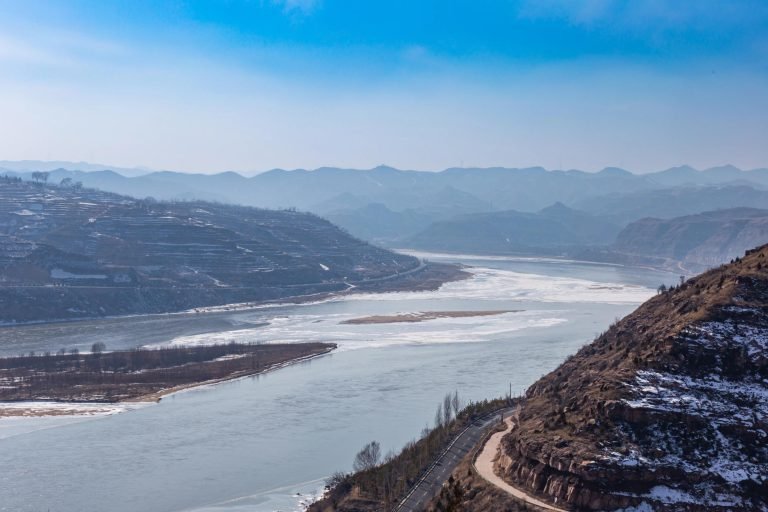
Quiet luxury China travel has entered a new era in 2026 — one defined not by grand lobbies or gilded spectacle, but by the deliberate absence of noise, obligation, and crowds. Across the country, a constellation of ultra-private properties and unhurried landscapes has emerged for travelers who understand that true privilege is measured in silence: the hush of a Ming-dynasty courtyard at dawn, the almost imperceptible scent of osmanthus drifting through a bamboo corridor at the Alila Anji, the way mist settles over the karst peaks of Yangshuo as though the world beyond simply ceases to exist. This is not the China of souvenir markets and flag-waving tour groups. This is the other China — the one that rewards those willing to look past the obvious.
✨ At a Glance
- The Core Reality in 2026: China now hosts more ultra-luxury private retreats per square kilometre of wilderness than almost any country on earth, yet the vast majority of foreign visitors never encounter them — routed instead through standardised group circuits.
- Crucial Advice: Properties such as Amanyangyun (Shanghai), Alila Anji (Zhejiang), and the Banyan Tree Ringha (Yunnan) allocate as few as six to eighteen rooms per night; advance reservations of six to twelve months are standard for peak season 2026.
- The Xiora Solution: Xiora Travel designs 100% private, no-shopping itineraries that sequence these sanctuaries into a single seamless journey — with bilingual guides, private vehicles, and preferred-access relationships with each property, so every logistical friction disappears before you feel it.
What Quiet Luxury China Travel Actually Means in 2026
The phrase “quiet luxury” entered the cultural vocabulary through fashion — the aesthetic philosophy of Loro Piana cashmere over Gucci logos, of craft over cacophony. Applied to travel, and specifically to China, it signals something more precise: the architecture of an itinerary built around restraint, privacy, and the confidence to slow down in one of the world’s most kinetically charged countries.
In practical terms, quiet luxury China travel in 2026 means staying in properties with fewer than thirty rooms, moving between destinations aboard a reserved Business Class pod on the Fuxing CR400 bullet train rather than through a domestic airport, and arriving at heritage sites during the private access windows that most visitors do not know exist. It means your guide has already arranged with the head curator of the Suzhou Garden Conservation Bureau for a thirty-minute walk through the Humble Administrator’s Garden before the public gates open. It means breakfast is served in your pavilion courtyard, not a buffet hall.

“In the best private sanctuaries of China, luxury is not something you see — it is something you no longer have to think about.”
Five Secluded Sanctuaries That Define Quiet Luxury China Travel
The following properties are not ranked by star rating or acreage. They are selected because each one enacts a particular philosophy of stillness — and because each one rewards the traveler who arrives unhurried, unscheduled, and genuinely curious.
Amanyangyun, Shanghai
Forty Ming and Qing dynasty farmhouses and hundreds of ancient camphor trees, all threatened by a reservoir project in Jiangxi province, were dismantled timber by timber, transported to the outskirts of Shanghai, and meticulously reassembled over a decade by the Aman group. The result is not a reproduction; it is a genuine relocation — a vanished piece of vernacular China given an improbable second life in the largest city on earth. Guests move between private villas that smell of old wood and rain-washed stone, take restorative treatments in a water pavilion drawn from classical Chinese medicine, and eat from a menu calibrated to the seasonal rhythms of the Jiangnan region. Alipay QR codes are the only modern intrusion. Everything else is seventeenth century.
Alila Anji, Zhejiang Province
Set in the bamboo-forested hills west of Hangzhou that inspired classical Chinese landscape painting for a thousand years, Alila Anji cantilevres its forty-two villas into the hillside so that every bed faces an uninterrupted valley of green. In winter, a low mist settles below the treeline each morning and dissolves slowly by ten o’clock, leaving the bamboo sheened with dew and utterly silent. The property’s tea ceremony program, conducted in a glass pavilion suspended above the canopy, draws on the living tradition of the Anji white tea harvest — one of the rarest tea varietals in China, cultivated on these precise slopes for centuries.
Banyan Tree Ringha, Yunnan
At 3,200 metres elevation in the Tibetan highlands north of Shangri-La, the Banyan Tree Ringha converts a complex of traditional Tibetan farmhouses into a series of lodge rooms and private villas that ring a central courtyard alive with prayer flags and the smell of burning juniper. The altitude itself imposes a pace; the body slows, the breath deepens, the urge to fill every hour dissolves naturally. Guests who arrive expecting a conventional luxury hotel leave having experienced something more like a structured retreat — hikes to isolated monasteries, private yak cheese tastings at altitude, evenings around a fire burning dried yak dung in the traditional manner.
The Capella Shanghai, Jian Ye Li
Located in the heart of the former French Concession, the Capella Shanghai is a restoration of nine 1930s Shikumen townhouses — the distinctive stone-gated architecture unique to Shanghai’s colonial-era residential quarters. The fifty-seven suites preserve the original lane configuration, so guests traverse a private internal alley between breakfast and the library, between the pool and the bar, between one century and another. This is the anti-spectacle version of Shanghai: no Bund-facing panorama, no rooftop infinity pool above the Huangpu. Just the particular intelligence of a building that knows exactly what it is.
Songtsam Retreats, Eastern Tibet Circuit
The Songtsam group operates twelve small lodges across the Tibetan Plateau and the Shangri-La to Lhasa corridor, each one positioned to function as a base camp for the landscape surrounding it rather than a destination in itself. The lodges are connected by a loose private circuit — guests may transfer between them by jeep along unpaved mountain roads, by light aircraft over the Hengduan Mountains, or on horseback through river valleys where no road has been built. The circuit takes between seven and fourteen days to complete in full; Xiora Travel customises the sequence according to season, altitude sensitivity, and the specific landscapes our clients have come to experience.
| Feature | Standard Group Tour | Xiora Luxury Standard |
|---|---|---|
| Group Size | 16–40 passengers per coach | Your party only — 100% private |
| Accommodation | Pre-contracted 4-star chain hotels | Curated boutique sanctuaries (Aman, Alila, Banyan Tree) |
| Shopping Stops | Mandatory — typically 2–4 per day | Zero — guaranteed no-shopping policy |
| Heritage Site Access | Standard public hours, shared queues | Pre-arranged private access windows, skip-the-queue entry |
| Intercity Transport | Economy or First Class rail, shared coaches | Fuxing CR400 Business Class or private charter, door-to-door |
| Guide Continuity | Rotates city by city, unknown quality | Dedicated bilingual expert, same guide for entire journey |
| Digital Payments | Left to navigate Alipay/WeChat Pay independently | Pre-configured before arrival; guide handles all transactions |
The Art of Moving Between Sanctuaries
One of the underappreciated pleasures of a well-constructed quiet luxury China itinerary is the quality of the transitions. The journey between destinations, handled poorly, is what most group tours get catastrophically wrong — the 5am airport call, the shared shuttle, the anonymous departure lounge. Handled correctly, the transition itself becomes part of the experience.
Xiora Travel structures intercity movement primarily around China’s high-speed rail network in Business Class — the Fuxing CR400BF lie-flat pod that departs Beijing South and arrives in Xi’an North in under four and a half hours. Our guides deliver clients to the VIP lounge of the departure station and meet them at arrival with a private sedan already positioned outside the station exit. WeChat Pay handles every incidental. The landscape between cities — the ochre loess plateau between Xi’an and Lanzhou, the rice paddies south of Hangzhou — becomes something to be watched rather than endured.
For the Yunnan and Tibetan circuits, where rail connections thin and road surfaces become an adventure in themselves, Xiora arranges private light aircraft transfers between Dali, Lijiang, Shangri-La, and Deqin — dramatically shortening travel time while placing the full sweep of the Hengduan Mountain range beneath your window at altitude.

Quiet Luxury China Travel: Navigating the Practical Realities
Even the most beautiful itinerary in the world fails without competent ground logistics. China in 2026 runs on digital infrastructure — Alipay and WeChat Pay, QR code ticketing, ride-hailing apps — that many Western travelers encounter for the first time on arrival. The Great Firewall blocks Google Maps, WhatsApp, and Instagram. Currency exchange at hotel desks is possible but inefficient. These are not insurmountable problems, but they require preparation, and their resolution is what distinguishes a truly premium experience from a merely expensive one.
Xiora Travel pre-configures the practical layer before departure. Each client receives a briefing on activating Alipay’s international edition with a foreign Visa or Mastercard, a pre-arranged international eSIM with a verified VPN profile active before wheels-down, and a private WeChat group linking the client directly to their guide throughout the journey. The guide maintains an emergency float in RMB for any merchant whose QR system is temporarily offline. The clients experience none of the friction. They experience only China.
- Digital Payments: Alipay International Edition accepts Visa, Mastercard, and Amex — no Chinese bank account required. Active at virtually every museum ticket office, restaurant, and transport terminal in 2026.
- Connectivity: A pre-arrival international eSIM (iData or Airalo) paired with a reputable paid VPN (ExpressVPN or Astrill) ensures uninterrupted access to Western apps from the moment of landing.
- Heritage Site Timing: Pre-8am arrivals at Suzhou’s classical gardens, the Mogao Caves at Dunhuang, and the West Lake at Hangzhou eliminate the principal crowd problem at each location — a scheduling discipline your Xiora guide enforces without being asked.
- Shopping Policy: Xiora’s absolute no-shopping guarantee means no visits to state-sponsored jade emporiums, tea houses with obligatory purchase pressure, or “cultural demonstrations” that conclude with a retail upsell. Every hour is yours.
Travel Without the Friction
At Xiora Travel, our expert bilingual guides handle every logistical detail, ensuring a seamless, 100% no-shopping luxury experience. Your time belongs to the journey.
Explore Private Journeys ↗Curating the Right Itinerary: How Xiora Approaches the Design
A Xiora quiet luxury China itinerary typically spans ten to sixteen nights and is structured around two to four anchor properties, connected by a curated sequence of private day experiences. The itinerary is not assembled from a menu of options; it is composed — the way a musical programme is composed — with attention to pacing, contrast, and emotional arc.
A classical Jiangnan circuit, for example, might open in Shanghai at the Amanyangyun (three nights), where the decompression from a long international flight is aided by the camphor-scented air and the absence of any schedule the client has not personally chosen. It progresses to Hangzhou’s West Lake via a private high-speed rail connection (two nights, Amanfayun), then to the Alila Anji (two nights), before concluding in Suzhou with a private evening at the Garden of the Master of the Nets — a classical garden rented exclusively for the client’s final dinner, with pipa music performed on a stone stage reflected in a Ming-dynasty ornamental pond. The journey ends not in an airport departure hall but in a moment of absolute composure.
For those drawn further inland, the Yunnan and Tibetan circuit sequences Lijiang (the Banyan Tree Lijiang), Shangri-La (the Banyan Tree Ringha), and the Songtsam Benzilan Lodge — a sequence that takes the traveler from colonial-era cobblestone lanes to high-altitude grasslands grazed by Tibetan mastiffs, across an elevation range that transforms the light, the cuisine, and the quality of silence at each stage.
The Sensory Grammar of a Quiet Luxury China Journey
What distinguishes a superbly executed quiet luxury itinerary from a merely well-appointed one is the attention paid to what might be called the sensory grammar of the journey — the specific textures and temperatures and scents that accumulate, day by day, into something resembling memory.
It is the weight of handmade qipao silk against the fingers in a Suzhou textile workshop that has been producing fabric for the imperial court since the Song Dynasty. It is the particular coolness of a Longquan celadon tea bowl — a green so pale it is almost grey, fired in a kiln whose smoke has been rising in the mountains of Zhejiang for twelve centuries. It is the smell of the Tibetan Plateau at 4,000 metres in the hour before dawn: juniper resin, dry yak dung, cold rock, the faint sweetness of wild thyme crushed underfoot on the path to a monastery that receives perhaps thirty visitors in a year. It is the taste of Anji white tea brewed at the elevation where the leaves were picked, by the same hands that picked them.
These are not itinerary items. They cannot be scheduled in a spreadsheet. They are what happens when the schedule is designed with enough confidence and enough space for the unscheduled to occur — and for the traveler to be present when it does.
Frequently Asked Questions
What is quiet luxury travel in China and how is it different from a normal luxury tour?
Quiet luxury China travel refers to itineraries built around privacy, restraint, and sensory depth rather than high-volume sightseeing and status properties. Where a conventional luxury tour might include forty travelers, mandatory shopping stops, and pre-set menus at hotel restaurants, a quiet luxury experience is structured around small boutique properties (often fewer than twenty rooms), private access to cultural sites during off-peak hours, and a pace slow enough to actually absorb the country. The difference is not principally one of budget — it is one of philosophy. The quieter the itinerary, the more of the real China becomes visible.
What are the best secluded luxury hotels to stay at in China in 2026?
For 2026, the most consistently exceptional secluded properties include Amanyangyun in Shanghai (Ming-dynasty buildings on a private estate), Alila Anji in Zhejiang (bamboo-forest villas at altitude), the Banyan Tree Ringha in Yunnan (Tibetan farmhouse lodges at 3,200 metres), the Capella Shanghai in the French Concession (nine restored 1930s Shikumen townhouses), and the Songtsam Retreats along the Tibetan Plateau circuit. Each offers fewer than fifty rooms, no group tour access, and an architectural or landscape quality that cannot be replicated by a larger, more commercial property. Availability for peak season — particularly October and March — is extremely limited, and reservations should be secured six to twelve months in advance.
How do I book a private no-shopping China tour that actually keeps its promises?
The critical question to ask any operator is whether the no-shopping guarantee is contractual or merely aspirational. Many agencies describe their tours as “private” while still routing clients through state-sponsored shopping venues — jade emporiums, tea houses, and silk factories where the guide receives a commission. Xiora Travel’s no-shopping policy is absolute: it is written into the service agreement, and no shopping stops of any kind appear in any itinerary, at any point. Our guides are salaried rather than commission-dependent, which structurally eliminates the commercial incentive that drives this practice. To begin planning your private bespoke China tour, contact our concierge team via the inquiry form — initial consultations and itinerary design are provided at no charge.