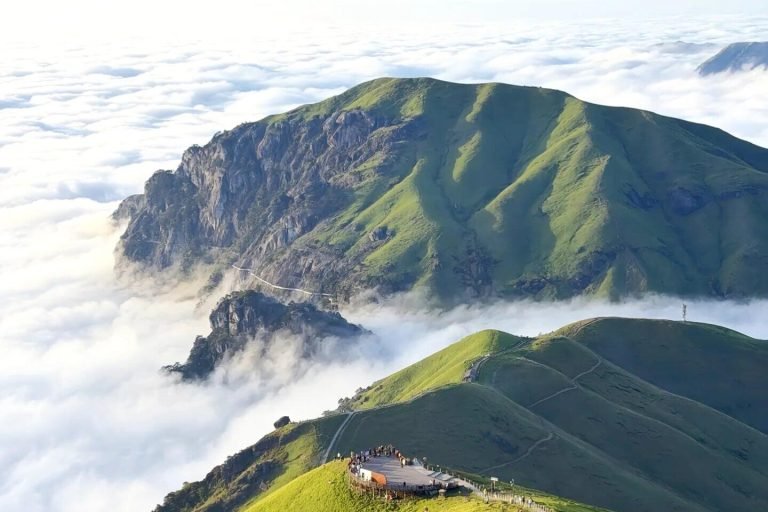
Rising from the mist like a fever dream, the sandstone pillars of Zhangjiajie National Forest Park are among the most astonishing geological formations on Earth — and the confirmed visual inspiration behind the floating Hallelujah Mountains of Avatar. For the discerning traveller who demands more than a crowded viewing platform and a souvenir shop, timing your visit is everything. The right season transforms Zhangjiajie from spectacular into utterly transcendent. The wrong one leaves you navigating Golden Week tour groups in a cloud of humidity. This guide gives you the authoritative, season-by-season intelligence you need to plan a journey worthy of this landscape.

Why Timing Your Visit to Zhangjiajie Is a Non-Negotiable Decision
Zhangjiajie sits in Hunan Province at an elevation that attracts persistent cloud and rain year-round. That atmospheric moisture is, paradoxically, one of its greatest assets — those signature sea-of-clouds moments happen precisely because of it. However, there is a decisive difference between photogenic morning mist and three consecutive days of low visibility and saturated trails. Understanding the seasonal rhythms of this landscape is the foundation of any well-crafted itinerary.
Zhangjiajie National Forest Park, part of the Wulingyuan Scenic Area designated as a UNESCO World Heritage Site in 1992, covers over 26,000 hectares of protected wilderness. Within that expanse, the Tianzi Mountain Nature Reserve and the iconic Avatar Hallelujah Mountain (officially renamed in a stroke of cinematic marketing genius) reward visitors who arrive at the precise intersection of favourable weather, low domestic crowd pressure, and golden-hour light.
Season-by-Season Guide: The Best Time to Visit Zhangjiajie
Spring (March to May) — Verdant, Atmospheric, and Highly Recommended
Spring is one of the two premier windows for visiting Zhangjiajie. The landscape re-emerges from winter in vivid emerald and jade tones, with wildflowers carpeting the valley floors and rhododendrons blooming in extraordinary profusion across the upper ridgelines. Temperatures are pleasantly cool — ranging from approximately 12°C to 22°C — making extended walks through the park genuinely enjoyable rather than exhausting.
Rainfall increases through April and into May, but this works in the sophisticated traveller’s favour. Morning cloud inversions become more frequent and more dramatic, producing the sea-of-clouds effect that renders the pillar formations seemingly weightless, suspended above a white ocean. For photography, this is the most rewarding season of the year. Domestic tourism pressure remains moderate outside of the May Day Golden Week holiday (1–5 May), which should be avoided entirely.
Xiora’s verdict: March and early April represent the single best period to visit for those prioritising both scenery and seclusion. Book private sunrise access to Tianzi Mountain for an experience of near-solitary grandeur.
Summer (June to August) — Dramatic But Demanding
Summer in Zhangjiajie is lush, vivid, and hot. The park reaches peak green saturation, and the waterfalls cascading through the gorges are at their most powerful. However, humidity is relentless — temperatures regularly exceed 32°C with oppressive moisture levels — and the park operates at its highest annual visitor density. July and August coincide with Chinese school holidays and drive significant domestic tourism volumes.
For clients travelling with children or those who find the atmospheric drama of cloud and mist more compelling than clear blue skies, summer can still yield memorable experiences — particularly at elevation, where temperatures are marginally more forgiving. Early morning departures (pre-8am) are essential to outpace the crowds at key viewpoints. A curated private itinerary with pre-arranged VIP access to the Bailong Elevator and Yuanjiajie Scenic Area makes a meaningful difference here.
Xiora’s verdict: Feasible with meticulous planning, but not the optimal season for the high-expectation traveller. Those with flexibility should look elsewhere on the calendar.
Autumn (September to November) — The Connoisseur’s Choice
Autumn is, by nearly every measure, the finest season to visit Zhangjiajie — and the period most favoured by experienced China travellers. From mid-September, temperatures moderate into an ideal 10°C to 24°C range. The humidity that burdens summer retreats decisively. Skies achieve a cobalt clarity rarely seen at other times of year, allowing the full vertical scale of the sandstone columns — some rising over 200 metres — to be appreciated in sharp, photographic detail.
By October, the foliage transitions begin: the surrounding mixed forests shift through amber, rust, and deep crimson, creating a colour palette that frames the grey-white pillars with extraordinary contrast. October 1–7 (National Day Golden Week) brings peak crowds and should be bracketed out of any itinerary. The windows of mid-September and mid-to-late October, however, offer conditions that are as close to perfection as this landscape provides.
Xiora’s verdict: October (avoiding Golden Week) is our primary recommendation for first-time visitors. Mid-September is ideal for those seeking warmth, autumn colour, and moderate visitor numbers simultaneously.

Winter (December to February) — Serene, Uncrowded, and Surprisingly Rewarding
Winter is Zhangjiajie’s best-kept secret. Visitor numbers drop dramatically, and those who make the journey are rewarded with near-empty walkways and an entirely different aesthetic register. When snowfall occurs — typically between December and February — the park is transformed into something resembling a classical Chinese ink painting: white-capped pillars emerging from grey cloud, utterly silent, stripped of all the visual noise that crowds bring.
The risks are real. Cold temperatures (occasionally dropping below 0°C at elevation) require appropriate layering, and ice can make some trails temporarily inaccessible. Certain cable cars and attractions operate on reduced winter schedules. However, for clients who have seen Zhangjiajie in the popular travel photography canon and wish to experience something genuinely different — and genuinely private — a well-planned winter visit can be the most memorable of all.
Xiora’s verdict: Exceptional for experienced China travellers seeking exclusivity and a photographer’s once-in-a-decade moment. Requires detailed advance logistics management, which is precisely what Xiora provides.
Experience Zhangjiajie on Your Terms — Privately, Exclusively, Without Compromise
At Xiora Travel, every Zhangjiajie itinerary is engineered from first principles around your interests, pace, and travel style. There are no group departures, no compulsory shopping stops, and no compromises on access. Our private guides hold insider relationships with park management, allowing us to secure sunrise-only viewpoints, restricted trail permits, and accommodation in the park’s finest properties — all seamlessly coordinated so your only role is to arrive and be present.
Whether you are planning a standalone journey to Hunan’s remarkable landscapes or incorporating Zhangjiajie into a broader private China itinerary through Beijing, Xi’an, or Guilin, our team builds every detail to the standard you expect. This is luxury travel by design, not by brochure.
Plan Your Journey ↗Crowds, Public Holidays & Golden Weeks: The Dates to Avoid
Any serious travel intelligence brief on China must include a frank conversation about domestic holiday periods. China’s Golden Week holidays — particularly the National Day period (1–7 October) and Chinese New Year (January or February, varying annually) — generate visitor volumes at major scenic sites that are incompatible with the experience that high-net-worth travellers expect. Zhangjiajie, as one of China’s most iconic and Instagram-saturated destinations, is particularly affected. During peak Golden Week, daily visitor admissions are capped at 50,000, and waits for key cable cars can extend beyond two hours.
The practical guidance is straightforward: build your itinerary around these blackout periods, not within them. The shoulder windows immediately before and after each Golden Week — late September and mid-to-late October — often deliver near-identical conditions with a fraction of the visitor pressure. Xiora’s advance planning model ensures your travel dates are calibrated against both the weather almanac and the domestic tourism calendar simultaneously.
Practical Logistics: What to Know Before You Arrive
Zhangjiajie is served by Zhangjiajie Hehua International Airport, with direct connections from major Chinese hubs including Shanghai, Beijing, Chengdu, and Guangzhou. The park itself is vast — the Wulingyuan core scenic area alone requires a minimum of two full days to appreciate meaningfully, with three days being the ideal allocation for unhurried exploration. The Bailong Elevator (the world’s tallest outdoor lift, ascending 326 metres of sheer cliff face) and the glass-bottomed Zhangjiajie Grand Canyon Bridge are engineering spectacles that deserve dedicated time rather than a rushed tick-list visit.
Accommodation within and immediately adjacent to the park ranges from comfortable mid-tier properties to genuinely elevated options offering elevated ridge views. For clients with the highest expectations, Xiora pre-selects and pre-inspects accommodation, ensuring your base of operations reflects the standard of the experience itself.
Frequently Asked Questions
What is the single best month to visit Zhangjiajie for first-time visitors?
Mid-to-late October is the most consistently rewarded choice for first-time visitors. The summer humidity has fully cleared, autumn foliage is at or approaching peak colour, skies are reliably clear, and the post-Golden Week departure of domestic tourists restores a sense of scale and serenity to the park. Temperatures in the 12–20°C range are ideal for walking. If October is not possible, late March and early April are an excellent alternative, with the added appeal of spring wildflowers and frequent morning cloud inversions.
How many days should I allocate to Zhangjiajie on a private tour?
For a genuinely immersive experience — one that goes beyond the headline viewpoints to include the quieter trails of Suoxiyu Valley, the Tianzi Mountain summit at dawn, and the Zhangjiajie Grand Canyon — three full days within the park is the professional recommendation. Two days are the absolute minimum for a meaningful visit. Xiora typically designs four-night itineraries (three full days) that incorporate private guide-led exploration, pre-secured permit access to restricted areas, and curated evening experiences in the broader Hunan region, including dinner featuring authentic Hunanese cuisine.
Is Zhangjiajie suitable for luxury travellers who are not keen on hiking?
Absolutely. The park’s infrastructure is exceptionally well-developed by international standards. The Bailong Elevator, multiple cable car systems serving Tianzi Mountain and Yuanjiajie, and a network of paved observation walkways mean that virtually all of the signature viewpoints — including the Avatar Hallelujah Mountain panoramas — are fully accessible without demanding physical exertion. Xiora’s private guides are expert at building itineraries calibrated to each client’s mobility preferences, ensuring the experience is seamless and never uncomfortable, regardless of fitness level.